Rebar Basics
Sizes, weights, grades, cover, laps, hooks and the accessories that hold the cage in place.
 Rebar Basics
Bundled Bars in Reinforced Concrete: Limits, Drawings and Takeoff
Bundled bars are 2 to 4 parallel rebars tied in contact to act as one unit. ACI 318 limits, how bundles look on drawings, and how to count them in a takeoff.
7 min read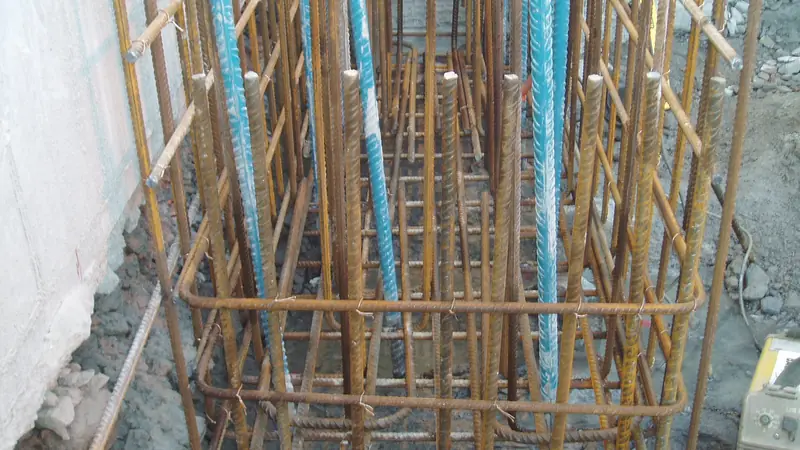 Rebar Basics
Epoxy Coated Rebar vs Galvanized, Stainless and GFRP: A Guide for Estimators
Epoxy coated rebar vs galvanized, stainless and GFRP bars: the ASTM standards, how each shows on drawings, and how coatings change a takeoff and laps.
8 min read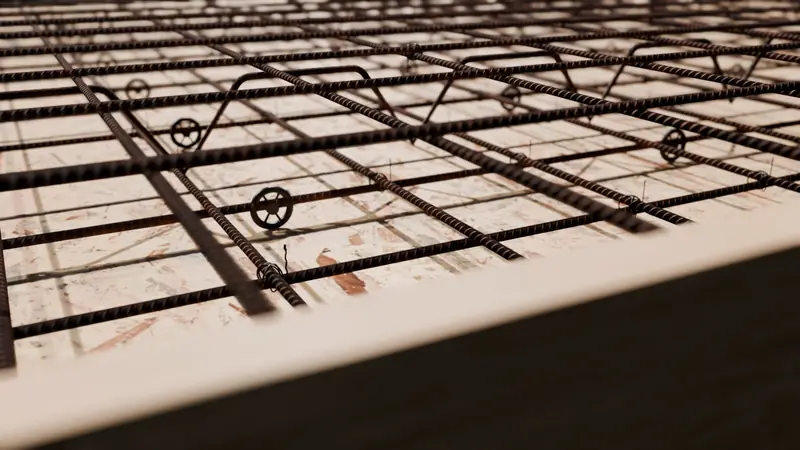 Rebar Basics
Concrete Cover for Rebar: Clear Cover, Typical ACI 318 Values and Bar Lengths
Concrete cover for rebar is the concrete between a bar and the surface. Clear cover vs to center, typical ACI 318 values, and how cover sets bar lengths.
6 min read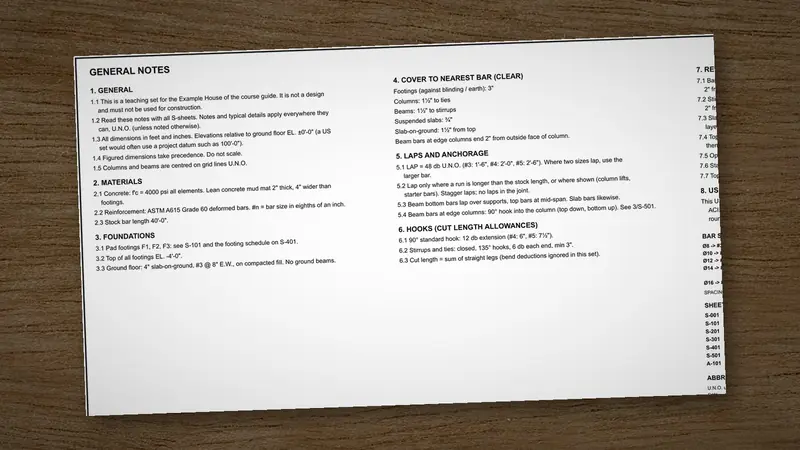 Rebar Basics
Fiberglass Rebar (GFRP): What It Is, Where It Is Used and How to Take It Off
Fiberglass rebar (GFRP) explained: what it is, where engineers specify it, why it cannot be bent on site, the ACI 440 documents and how to take it off.
8 min read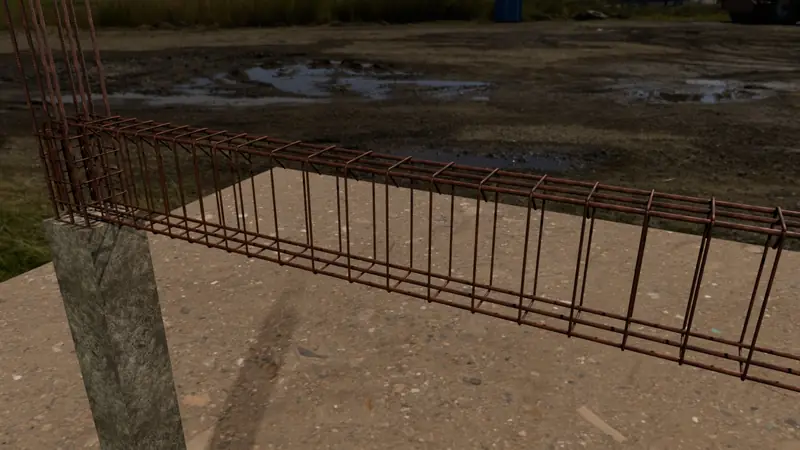 Rebar Basics
Lap Splice Length for Rebar: What Sets It and How Estimators Count Laps
Lap splice length for rebar depends on bar size, concrete strength, grade, position and coating. Where to find it on drawings and how to count laps.
8 min read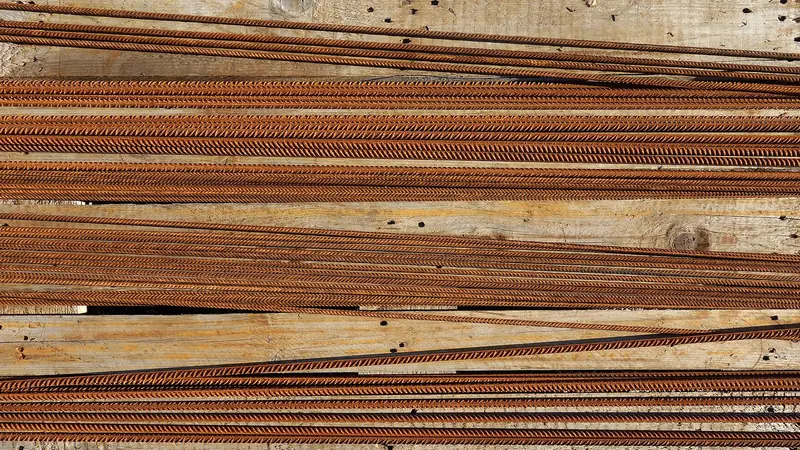 Rebar Basics
#4 vs #5 Rebar: Size, Area, Weight and Where Each Shows Up on Drawings
#4 vs #5 rebar compared: diameter, area, weight per foot, Grade 60 yield force, steel per foot at common spacings and where each shows up on drawings.
6 min read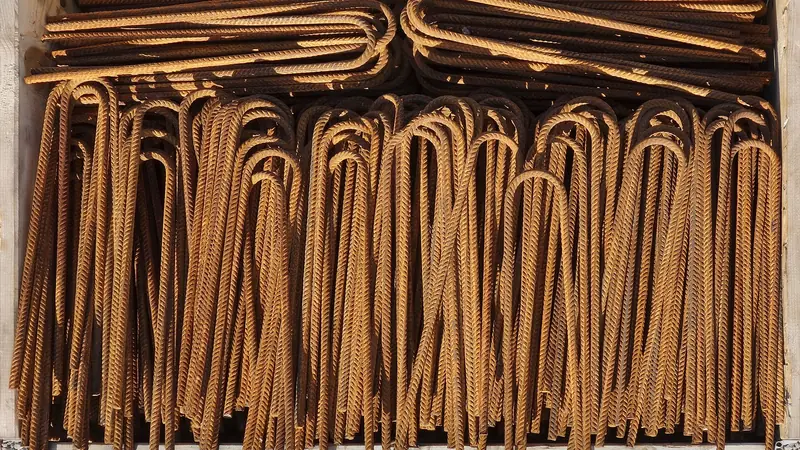 Rebar Basics
Rebar Bend Diameter: ACI Minimums, Why They Exist and How They Change Cut Length
Rebar bend diameter minimums in ACI 318: 6db, 8db and 10db for standard hooks, 4db for small stirrups, why they exist and how a bend changes cut length.
8 min read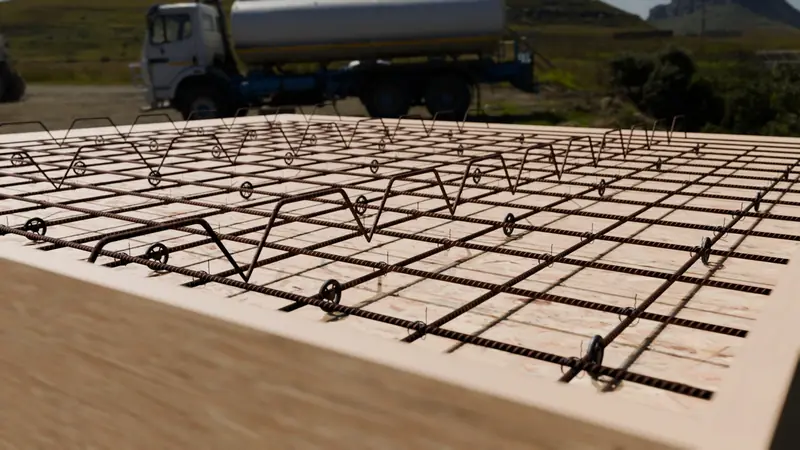 Rebar Basics
Rebar Chairs, Bolsters, Spacers and Couplers: What They Are and How to Estimate Them
Rebar chairs, slab bolsters, high chairs, spacers, tie wire and couplers explained, with a method to estimate accessories by count or as an allowance.
8 min read Rebar Basics
Rebar Couplers: Mechanical Splices Explained for Estimators
Rebar couplers join bars end to end instead of lapping them. Learn the main types, why they are used, how they appear on drawings and how to count them.
7 min read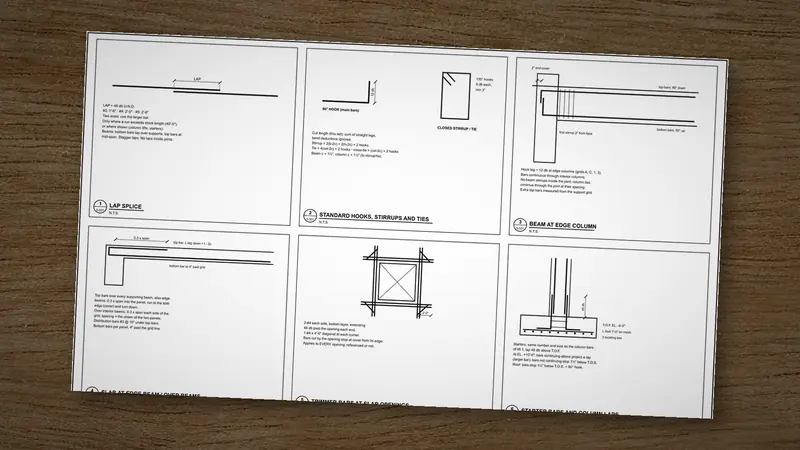 Rebar Basics
Rebar Cut Length Formula: Straight Bars, Hooks and Stirrups
The rebar cut length formula for straight bars, hooked bars and stirrups, what a bend deduction is and why tables differ, with worked examples in inches.
7 min readRebar BasicsRebar Grades Explained: ASTM A615, A706, BS 4449, IS 1786 and AS/NZS 4671
Rebar grades explained: ASTM A615 Grade 40 to 100, weldable A706, BS 4449 B500A/B/C, IS 1786 Fe500 and Fe500D, AS/NZS 4671 D500N, and the bar marks.
7 min read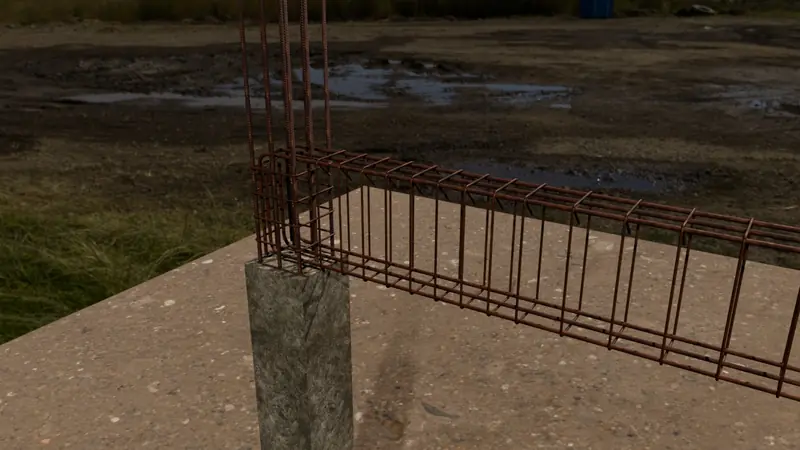 Rebar Basics
Rebar Hook Dimensions and Development Length, Explained for Estimators
Rebar hook dimensions for 90, 135 and 180 degree standard hooks and seismic hooks per ACI 318, what development length means, and how hooks add to cut length.
8 min read Rebar Basics
Rebar Markings: How to Read the Mill Marks on a Reinforcing Bar
Rebar markings decoded: the mill symbol, bar size, S or W steel type and grade lines or numbers rolled on ASTM bars, with metric size marks and examples.
7 min readRebar BasicsRebar Sizes Chart: Diameters, Areas and Weights for US and Metric Bars
A rebar sizes chart for ASTM A615 #3 to #18 and metric 8 to 40 mm bars: nominal diameter, area and weight per foot and per meter, with worked examples.
6 min read Rebar Basics
Rebar Spacing: What "@ 12 in O.C." Means and How to Count Bars
Rebar spacing explained: what #4 @ 12 in O.C. means on a drawing, how to count bars across a width with covers, why you round up, and minimum clear spacing.
7 min read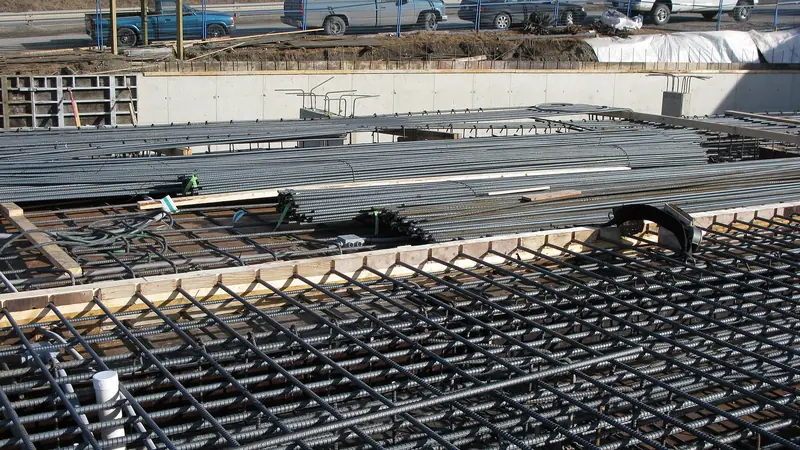 Rebar Basics
Rebar Storage and Handling on Site: Bundles, Tags and the Bar List
Rebar storage on site done right: bundles on timbers, tags at one end, sorting by mark, coated bar care, and how each bundle tag ties back to the bar list.
7 min read Rebar Basics
Rebar Tie Wire and Tying: Gauges, Tie Types and How Estimators Carry It
Rebar tie wire explained: 16 gauge black annealed wire, snap, saddle and figure-eight ties, coated wire for coated bars, and how estimators carry tie wire.
7 min read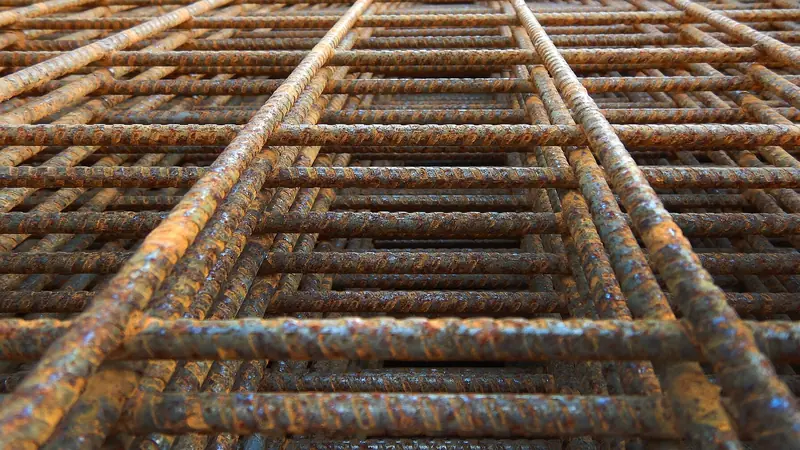 Rebar Basics
Rebar vs Wire Mesh: Differences, Placement Problems and How Each Shows Up on Drawings
Rebar vs wire mesh compared: steel area, how each is specified on drawings, why mesh ends up at the bottom of the slab, and a worked steel-area example.
7 min readRebar BasicsStirrups vs Ties: What They Do, How to Count Them and Their Cut Length
Stirrups vs ties explained: beam stirrups resist shear, column ties hold the vertical bars. How to count them from spacing and work out a stirrup cut length.
7 min readRebar BasicsWelded Wire Mesh Sizes: Reading WWR Designations and Estimating Sheets
Welded wire mesh sizes explained: reading 6x6-W1.4xW1.4, steel area per foot, UK A142 to A393 and Australian SL mesh, laps, and how to estimate sheets.
8 min readFree download
The Rebar Callout Cheat Sheet
One printable page: the five questions every callout answers, four labels decoded, and the same bar in six notations. Keep it next to the set of plans.