Rebar Storage and Handling on Site: Bundles, Tags and the Bar List
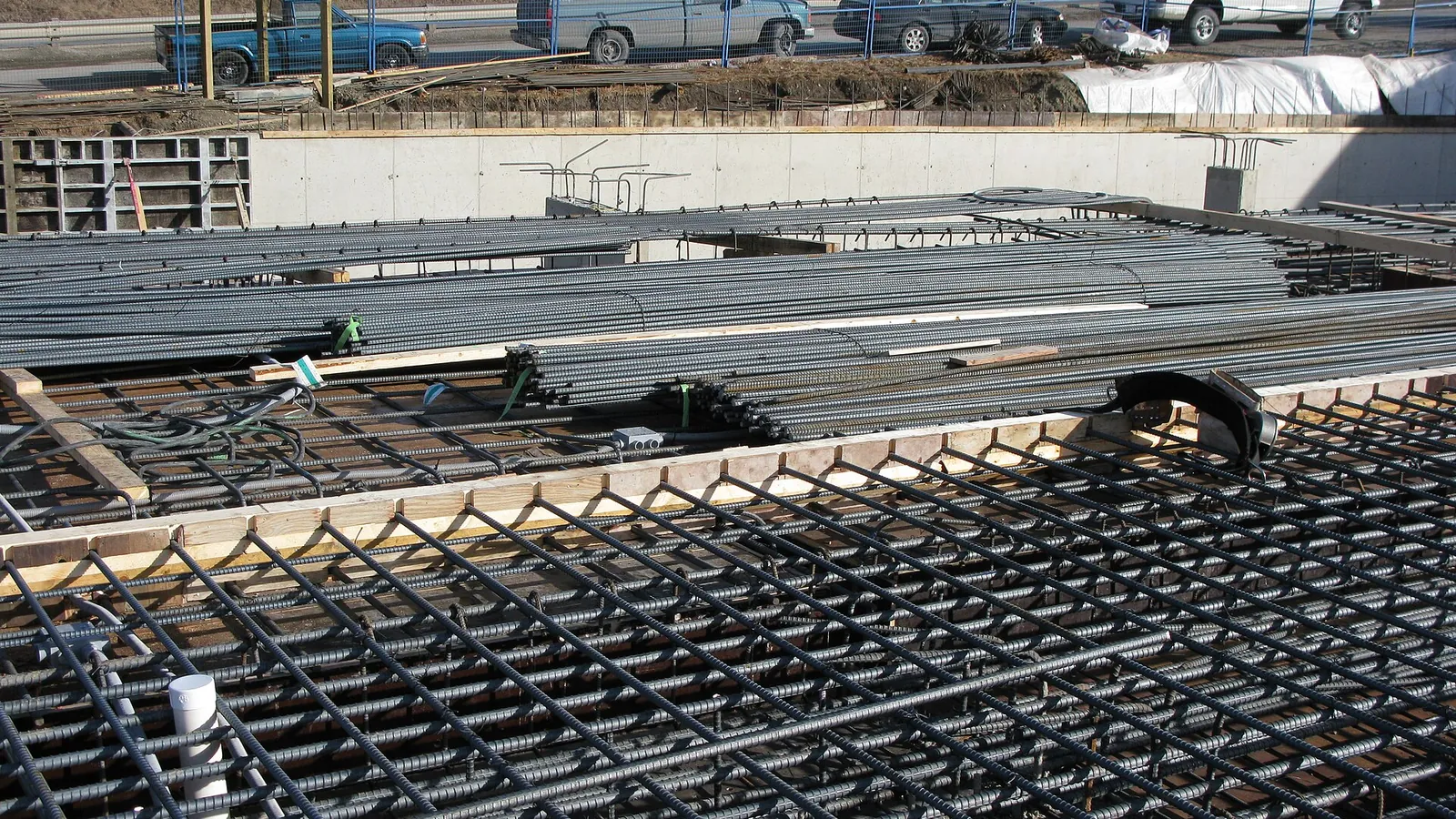
Good rebar storage on site means bundles set on timbers off the ground, out of mud and standing water, sorted by size, length and mark, with every bundle tag facing the same way so the crew can find a bar without unstacking the pile. Each tag carries the bar mark, and that mark is the link between the bundle on the ground, the line on the bar bending schedule and the location on the placing drawing.
Why storage and handling matter
Fabricated rebar arrives cut, bent and bundled by mark, ready to go into place. Everything after the truck stops can either keep that order or destroy it. A pile of mixed bundles in the mud costs time every day: the crew digs for the next mark, bars get cleaned before placing, tags get lost, and pieces are used in the wrong place.
For an estimator, storage is not a separate line on most estimates, but it drives real costs: unloading equipment, handling labor, the number of deliveries, and double handling when bars cannot be lifted straight to where they go. Understanding it makes your assumptions about labor and deliveries better.
Delivery and unloading
Each shipment comes with a list of what is on the truck, called a manifest, loading sheet or delivery ticket. Check the manifest as bundles come off the truck. That is the moment to find a missing bundle or a wrong size, not three weeks later when the crew reaches that mark.
Where possible, bundles are hoisted straight from the truck to the area of the structure where they will be placed, which saves handling them twice. Where they cannot be, they go to a storage area close to the work.
Rebar storage on site: the basics
Field storage guidance, such as CRSI's placing references, comes down to a few rules:
| Rule | Why |
|---|---|
| Choose an area with truck access and easy re-handling to the work | Fewer moves per bundle |
| Set bundles on timbers (dunnage), off the ground | Keeps bars out of mud and standing water |
| Keep all tags at the same end of the bundles | Fast identification without moving bundles |
| Store straight bars by size and length | The crew pulls the right bar first time |
| Group similar bent bars together | Shapes stay with their marks and are easy to find |
| Keep the tagged bar with the bundle when it is opened | The tag stays with the remaining bars |
| Order deliveries to suit the construction schedule | Less stock on site, less handling |
Supporting the bundles
Put enough timbers under each bundle to keep it clear of the ground along its whole length; a long bundle on two timbers can sag into the mud between them. Keep bundles from bearing on each other in a way that crushes bent shapes: heavy straight bars stacked on top of stirrups and ties can deform the light bent bars.
Keeping bars clean
Reinforcement must be free of mud, oil and other coatings that reduce bond when the concrete is placed. Bars stored on timbers stay clean; bars dropped in the mud have to be cleaned before they go in. Light surface rust from outdoor storage is a separate question, covered in is rusty rebar OK.
Coated bars
Epoxy-coated and other coated bars need more care, because coating damage has to be repaired before the concrete is placed. Handling and storage should minimize damage, and bundling bands should be padded or made of a material that will not cut the coating. Lift them with suitable slings rather than chains, do not drag them, and keep them on timbers. Specifications commonly require covering coated bars stored outdoors beyond a set time; read the time limit and the cover requirement in the specification. More in coated rebar types.
What is on a bundle tag
A typical fabricator's tag shows the job, the bar mark, the number of pieces, the bar size, the length or the bent dimensions, and the weight. Some tags carry a barcode for the fabricator's tracking.
The bar mark is the key field. It is the same code that appears:
- On the bar bending schedule (bar list), with the quantity, size, shape and dimensions. See bar bending schedule.
- On the placing drawing, where the mark shows exactly where those bars go. The difference between placing drawings and design drawings is in shop drawings vs design drawings.
- On the tag on the bundle in the yard.
So when the foreman needs the bars for a footing, the path is: placing drawing, mark, tag, bundle. If tags are lost or the bundles are mixed, that path breaks and the crew is left measuring bars to guess what they are. The bar mark quick answer explains how marks are built.
Worked example: checking a delivery against the bar list
A truck arrives with three bundles. The manifest gives a total of 1,644 lb. The tags read:
| Tag mark | Pieces | Size | Length | Weight on tag |
|---|---|---|---|---|
| F4A | 24 | #4 | 18'-6" | 297 lb |
| B5S1 | 60 | #5 | 6'-2" (stirrup, cut length) | 386 lb |
| C8 | 12 | #8 | 30'-0" | 961 lb |
Step 1: check each tag. Length x pieces x weight per foot:
- F4A: 24 x 18.5 ft = 444 ft, x 0.668 lb/ft = 296.6 lb, rounds to 297 lb
- B5S1: 60 x 6.167 ft = 370.0 ft, x 1.043 lb/ft = 385.9 lb, rounds to 386 lb
- C8: 12 x 30 ft = 360 ft, x 2.670 lb/ft = 961.2 lb, rounds to 961 lb
Step 2: check the total. 296.6 + 385.9 + 961.2 = 1,643.7 lb, which matches the manifest's 1,644 lb.
Step 3: check against the bar list. Find marks F4A, B5S1 and C8 on the bar bending schedule. The pieces, sizes and lengths should match the schedule lines, and the schedule tells you where on the placing drawing each mark goes.
Step 4: spot-check the bars. Read the size mark rolled on a few bars from each bundle (see rebar markings). A bundle tagged #5 should not contain bars marked 6 or 19.
If a tag weight does not agree with its own count and length, something is wrong on the tag or in the bundle. Count the pieces before signing.
Handling on site
- Lifting. Bundles are lifted with slings or by equipment suited to the load. Long bundles are lifted at more than one pick point so they stay level and do not bend.
- Opening bundles. Cut the bands with the bundle resting on its timbers, not while it is in the air. Keep the tagged bar with the remaining bars.
- Bending and straightening in the field. Only where the engineer allows it, and within the limits of the specification. The engineer decides, not the crew.
- Leftovers. Return unused bars to the right stack with their size and mark known. Unmarked offcuts are the source of many placing errors.
What this means for the estimate
Storage itself is rarely priced as a line, but it sits behind assumptions that are:
- Deliveries: how many releases the job needs and whether the site can take full loads.
- Unloading and hoisting: whether a crane, forklift or telehandler is available when trucks arrive, or whether bars are moved by hand.
- Double handling: a cramped site where bars have to be moved twice costs more placing labor.
- Coated bars: extra care, covering and coating repair.
Note these in your assumptions, so the person pricing the placing labor knows what conditions you priced. Write them where a reviewer will see them, next to the tonnage.
Frequently asked questions
How should rebar be stored on a job site?
On timbers, off the ground and out of mud and standing water, in an area with truck access close to the work. Sort straight bars by size and length, keep bent bars grouped by mark, and keep all bundle tags at the same end.
What information is on a rebar bundle tag?
A typical tag shows the number of pieces, the bar mark, the bar size and length or bent dimensions, and the total weight, usually with the job name. The mark links the bundle to the bar bending schedule and the placing drawing.
Can rebar be stored on the ground?
It should not be. Bars on the ground pick up mud and sit in water, and they have to be cleaned before placing because mud and other coatings reduce bond. Timbers under the bundles avoid that.
How do you store epoxy-coated rebar?
Handle and store it to avoid coating damage: padded bands, suitable slings, no dragging, and timbers under the bundles. Specifications commonly require covering coated bars stored outdoors beyond a set time, so read the specification for the limit.
Why do all rebar tags face the same way?
So the crew can read every mark from one side of the stockpile without moving bundles. It is a simple storage rule that saves time on every pick.
This article explains general practice for learning purposes. On a real project, the drawings, the general notes and the governing code always win.