Rebar Markings: How to Read the Mill Marks on a Reinforcing Bar
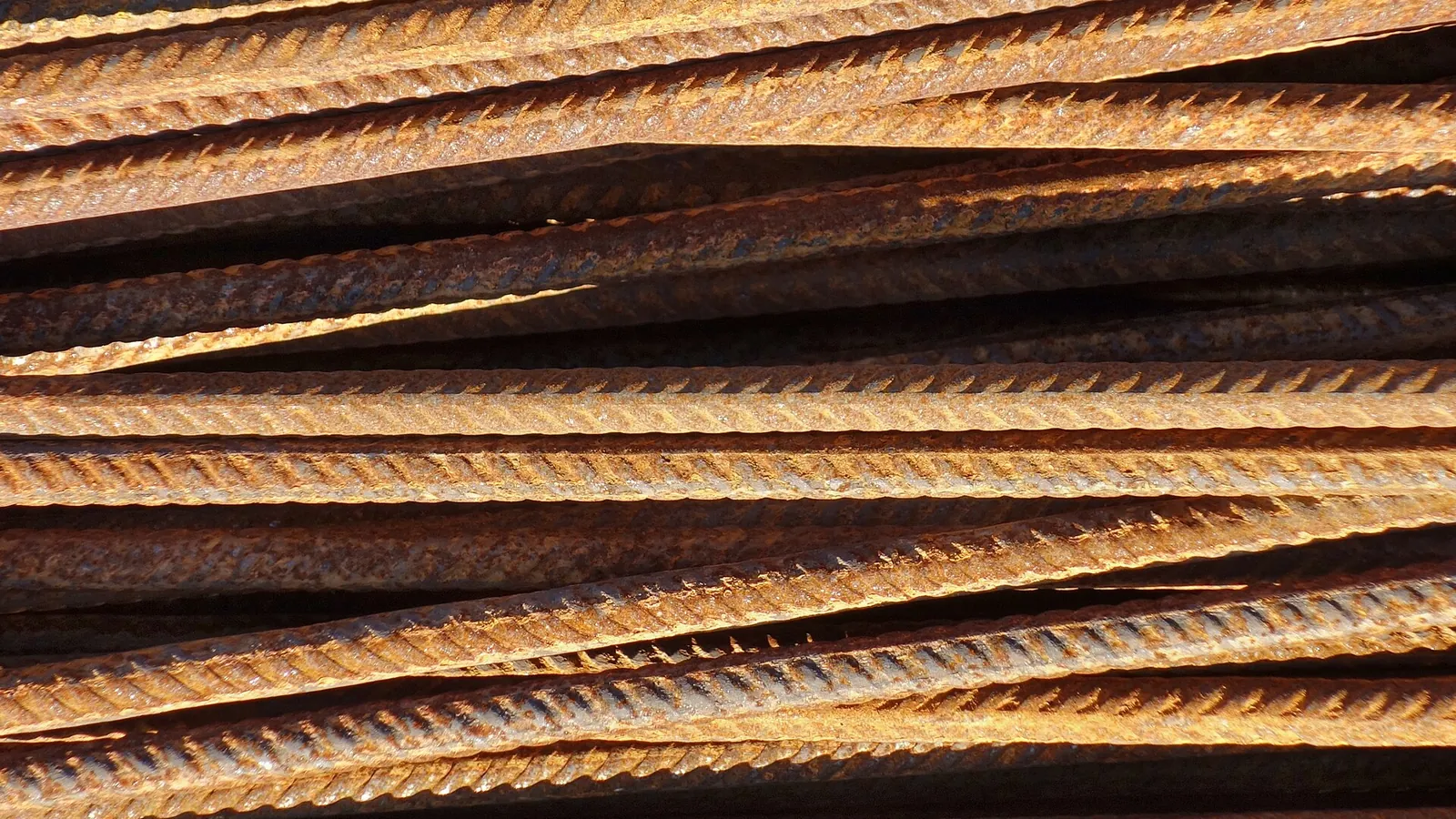
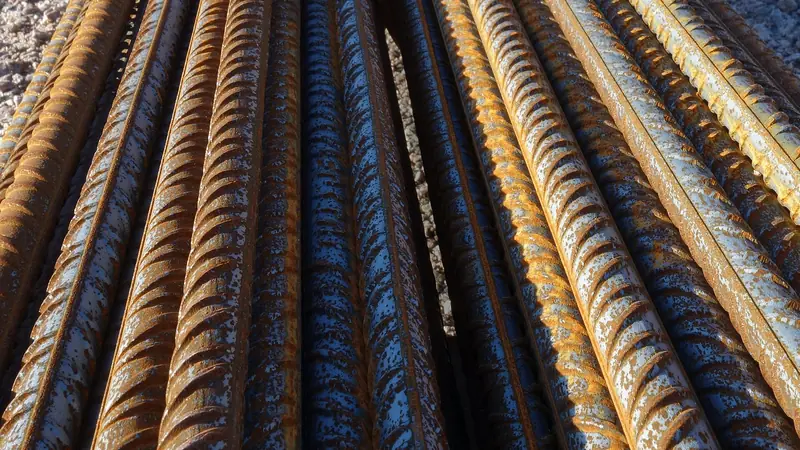
Rebar markings are the letters, numbers and lines rolled into the surface of a deformed bar at the mill. On ASTM bars they are read in order: a letter or symbol for the producing mill, the bar size, a letter for the type of steel (S for carbon steel to ASTM A615, W for low-alloy steel to ASTM A706), and a grade mark, given either as a number such as 60 or as one or more continuous lines. With them you can check, on site, that the bar in your hand is the bar the drawings call for.
Why bars are marked
Once a bar leaves the bundle and loses its tag, there is no paperwork attached to it. A #5 and a #6 look alike from a distance, Grade 60 and Grade 80 look identical, and an A706 bar looks like any other. The rolled marks are the bar's own identification, and they stay on it through cutting, bending and placing.
For an estimator, marks matter less than for an inspector, but you will meet them in three places: checking a delivery against the order, sorting out a mix-up on site, and understanding why a specification asks for A706 or a particular grade. The grades themselves are explained in rebar grades.
Reading rebar markings in order
The marks are rolled as raised characters on one side of the bar, between the deformations. CRSI describes the standard sequence:
- Mill symbol. A letter or symbol identifying the producing mill.
- Bar size. The size number, in inch-pound (such as 5) or in metric (such as 16).
- Type of steel. Usually S for carbon steel (ASTM A615) or W for low-alloy steel (ASTM A706).
- Grade mark. Either a number or lines running along the bar.
The mill symbol
Each producing mill has its own letter or symbol. It tells you who rolled the bar, which matters when a mill test report has to be matched to the steel on site. You do not need to memorize them; the mill test report and the bundle tag name the producer.
The bar size
Inch-pound bars are marked with the size number: 5 for a #5 bar. Many bars are marked with the soft metric size instead, which is the nominal diameter in millimeters rounded. The bar is physically the same; only the mark differs. US producers have been moving back to inch-pound marks, so you may see both on the same job.
| Inch-pound size | Metric mark | Nominal diameter (in) | Weight (lb/ft) |
|---|---|---|---|
| #3 | 10 | 0.375 | 0.376 |
| #4 | 13 | 0.500 | 0.668 |
| #5 | 16 | 0.625 | 1.043 |
| #6 | 19 | 0.750 | 1.502 |
| #7 | 22 | 0.875 | 2.044 |
| #8 | 25 | 1.000 | 2.670 |
| #9 | 29 | 1.128 | 3.400 |
| #10 | 32 | 1.270 | 4.303 |
| #11 | 36 | 1.410 | 5.313 |
| #14 | 43 | 1.693 | 7.650 |
| #18 | 57 | 2.257 | 13.600 |
The full table of areas and weights is on the rebar sizes reference, and the background is in rebar sizes and weights.
The type letter
- S: carbon steel to ASTM A615. This is the everyday reinforcing bar.
- W: low-alloy steel to ASTM A706. Its chemistry is controlled for weldability and it has tighter limits on its tensile properties.
Other specifications use their own letters. If you see a letter that is not S or W, check the mill test report rather than guessing.
Rebar grade lines and grade numbers
The grade can be marked in two ways. CRSI lists both:
| Grade (ksi) | Number system | Line system |
|---|---|---|
| 60 | 60 | 1 line |
| 75 | 75 | 2 lines |
| 80 | 80 | 3 lines |
The lines are continuous longitudinal lines rolled onto the bar, running over several deformations. Do not confuse them with the main longitudinal ribs that run along most deformed bars.
Bars may also carry the metric grade as a single numeral: "4" for Grade 420 (the metric equivalent of Grade 60) and "5" for Grade 520 (Grade 75).
Higher grades have their own marks, and the grades available in each specification change between editions. If the rebar markings show no grade mark, do not assume a grade from its appearance: read the bundle tag and the mill test report. What the grades mean for design is covered in what is Grade 60 rebar.
Worked example: decoding two bars and checking a tag
Bar A reads, in order: X, 5, S, 60.
- X: the producing mill
- 5: a #5 bar, 0.625 in (16 mm)
- S: carbon steel, ASTM A615
- 60: Grade 60, number system
Bar B reads: X, 16, W, and one continuous line.
- 16: the soft metric mark, so this is also a #5 bar
- W: low-alloy steel, ASTM A706
- One line: Grade 60, line system
Both bars are #5 Grade 60. Only Bar B is A706. If the general notes require A706 for bars that will be welded, Bar A is the wrong bar for that location even though its size and grade are right. More on that in can you weld rebar.
Checking the bundle. The tag on Bar A's bundle reads 40 pcs, #5, 20'-0", 834 lb.
Step 1: total length. 40 x 20 = 800 ft.
Step 2: weight. 800 x 1.043 = 834.4 lb.
Step 3: compare. The tag weight matches the count, size and length. If the tag had said 40 pcs, #5, 20'-0" and 1,202 lb, that is the weight of 800 ft of #6 (800 x 1.502 = 1,201.6 lb): a reason to look at the size mark on the bars before signing for the delivery.
Where rebar markings matter in practice
- Receiving deliveries. Check the size and type marks on a sample of bars from each bundle against the tag and the order. Mixed sizes are easiest to catch before the bundle is opened.
- Specified grades and types. When the notes call for Grade 80 in columns, or A706 in welded or seismic locations, the marks are the quick field check.
- Inspection. Inspectors read marks to confirm the bars in place match the approved shop drawings and mill test reports.
- Remnants and stock. Short pieces cut from a long bar may not show the full set of marks. Keep offcuts sorted by size and grade so they are not used in the wrong place.
The general notes are where the drawings state the required ASTM specification and grade, usually in the reinforcing steel section.
Marks outside the US
The sequence above is the ASTM system. Other standards mark bars differently. Some, such as the British system for BS 4449 bars, rely on rib patterns and marks that identify the manufacturer rather than on S/W letters and grade lines. If your drawings are to another standard, read that standard's identification rules; do not apply the S/W and line system to non-ASTM bars. The international rebar notation article covers how those drawings are labelled.
Frequently asked questions
What do the letters and numbers on rebar mean?
On ASTM bars, the first mark is the producing mill, the next is the bar size, then a letter for the type of steel (S for A615 carbon steel, W for A706 low-alloy steel), then the grade as a number or as lines. Read them in that order.
How can you tell if rebar is Grade 60?
Look for the number 60 rolled on the bar, or for one continuous longitudinal grade line in addition to the main ribs. A metric numeral 4 (for Grade 420) also indicates the Grade 60 equivalent.
What does the S on rebar mean?
S means carbon steel to ASTM A615, the standard reinforcing bar specification in the US. A W instead means low-alloy steel to ASTM A706, which is made for weldability.
Why does my #5 rebar say 16?
16 is the soft metric size mark for a #5 bar, from its nominal diameter of about 16 mm. The bar is the same as one marked 5; only the marking system is different.
Is rebar without markings acceptable?
Do not accept or reject a bar on looks alone. If marks are missing or unreadable, check the bundle tag and the mill test report, and ask the engineer or inspector if the bar's origin cannot be traced.
This article explains general practice for learning purposes. On a real project, the drawings, the general notes and the governing code always win.