What Is Grade 60 Rebar? Strength, Marking and Use
Grade 60 rebar is reinforcing steel with a minimum yield strength of 60,000 psi (60 ksi), which is Grade 420 (420 MPa) in the metric version of the ASTM standards. It is the most common grade of rebar in US building construction.
What "grade" means
The grade number is the minimum yield strength in ksi: the stress at which the steel starts to stretch permanently. The structural engineer designs with this value, so a bar of lower grade substituted on site carries less load than the design assumes.
| Property | ASTM A615 Grade 60 | ASTM A706 Grade 60 |
|---|---|---|
| Minimum yield strength | 60,000 psi (420 MPa) | 60,000 psi (420 MPa) |
| Maximum yield strength | Not limited | 78,000 psi (540 MPa) |
| Minimum tensile strength | 90,000 psi (620 MPa) | 80,000 psi (550 MPa) |
| Type letter on bar | S | W |
| Typical reason to specify | General reinforcement | Weldability, seismic detailing |
A706 bars have controlled chemistry and a cap on yield strength, which is why they are called for where welding or ductility matters. The rebar grades article compares Grade 40, 60, 75 and 80.
Where you see it
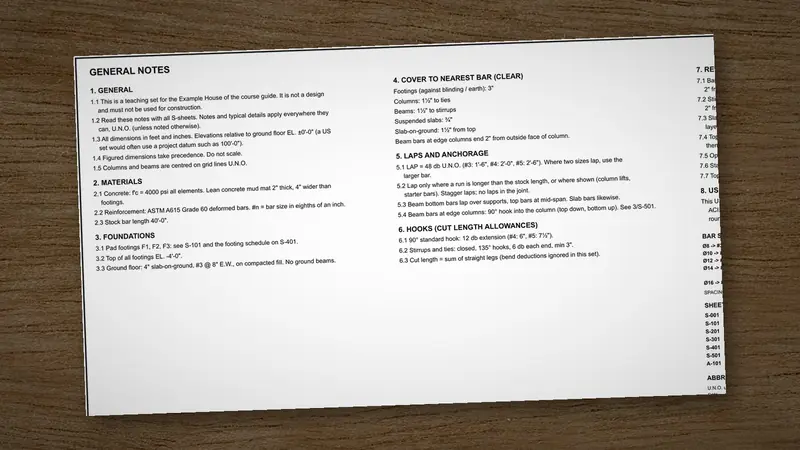
On drawings the grade is usually written once in the general notes, for example "Reinforcing steel: ASTM A615 Grade 60 unless noted otherwise." Bar callouts on plans do not repeat it. If certain elements need a different grade or A706 steel, the notes or the detail will say so. Read the general notes before anything else on a reinforcement job.
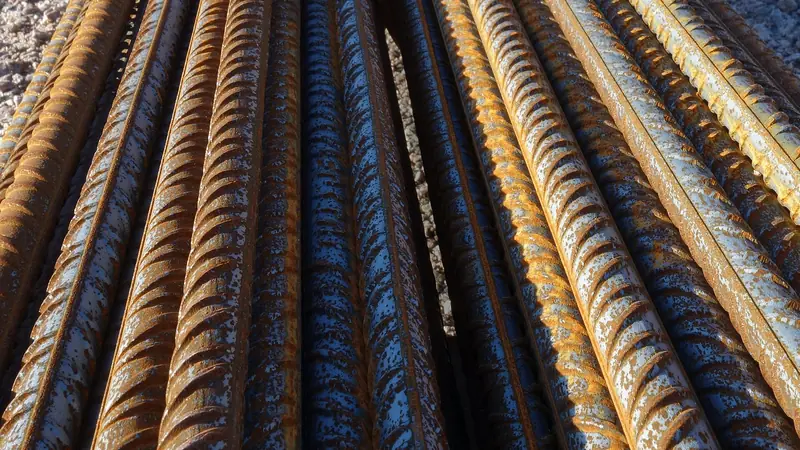
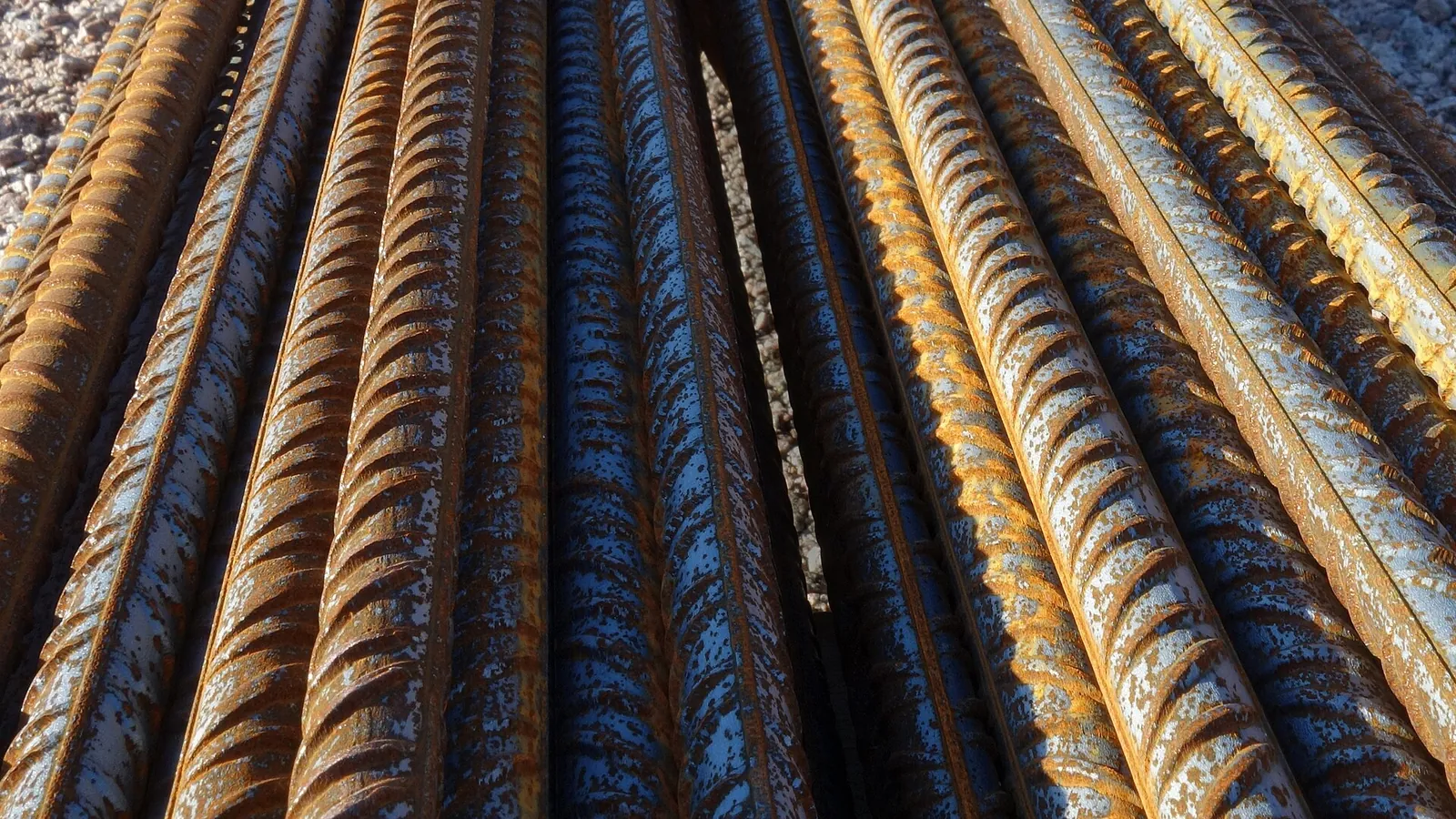
On the bar itself, the rolled marks read in order: the mill symbol, the bar size, the type letter (S or W) and the grade mark. Grade 60 is shown either by the number "60" or by one continuous longitudinal grade line between the ribs. Grade 40 bars carry no grade mark.
Worked example: why the grade matters
A beam needs a tension force of 72 kips carried by its bottom bars. Ignoring the design factors for this illustration:
- With Grade 60 steel, area needed: 72 / 60 = 1.20 in²
- With Grade 40 steel, area needed: 72 / 40 = 1.80 in²
- In #6 bars (0.44 in² each): Grade 60 needs 3 bars (1.32 in²); Grade 40 needs 5 bars (2.20 in²)
The real design includes strength reduction factors and code checks, but the point holds: a bar of a lower grade is not a like-for-like swap.
A common mistake
Assuming every bar delivered is Grade 60 because "that is what everyone uses". Check the grade mark or the mill certificate against the general notes, especially on jobs that call for A706, Grade 80 or a mix of grades.
Frequently asked questions
Is Grade 60 rebar the same as Grade 420?
Yes. Grade 420 is the metric designation (420 MPa) of the same strength level in the ASTM standards. The bar is the same; only the unit changes.
How do I know if rebar is Grade 60?
Look at the rolled marks on the bar: a "60" or a single continuous longitudinal line indicates Grade 60. The mill test report for the heat number confirms it.
Can Grade 60 rebar be welded?
A615 Grade 60 can be welded only under the procedures of AWS D1.4, which depend on its chemistry. A706 is the grade made for welding. See can you weld rebar.
This article explains general practice for learning purposes. On a real project, the drawings, the general notes and the governing code always win.