Why It Stands · No. 18
Who Invented Concrete?
It Was Invented Twice
 Video coming soon. Full article below
After water, concrete is the material that people use more than any other. So who invented it? The honest answer: it was invented twice.
From lime mortar to Roman concrete and the Pantheon, a thousand years in which the recipe was almost forgotten, then Smeaton's lighthouse, Aspdin's Portland cement, Monier's flower pots, Hennebique's frames, Freyssinet's prestressing, and the concrete of today, with its carbon problem.
The full story
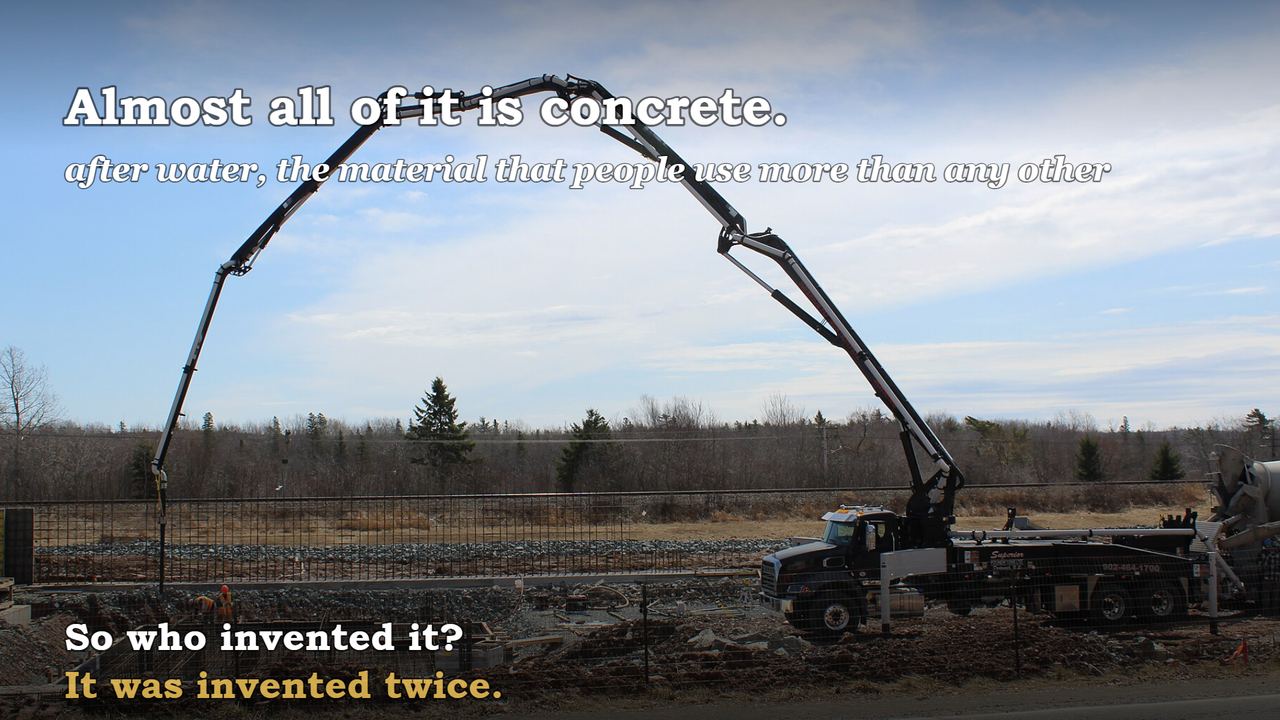
Look around you. The floor under your feet, the bridge you crossed this morning, the dam that gives you water. Almost all of it is concrete. After water, it is the material that people use more than any other. So who invented it? The honest answer is: it was invented twice.
Concrete is a simple recipe. Sand and stones, held together by a glue. The glue is cement, mixed with water. It does not dry, like mud. It reacts with the water, and turns into stone. The whole history of concrete is really the history of that glue.
The first glue was lime. Burn limestone in a fire, add water, and you get a paste that slowly hardens in the air. People used it for thousands of years, for plaster and for mortar between stones. But lime has a weakness. It is not very strong, and it does not harden under water.
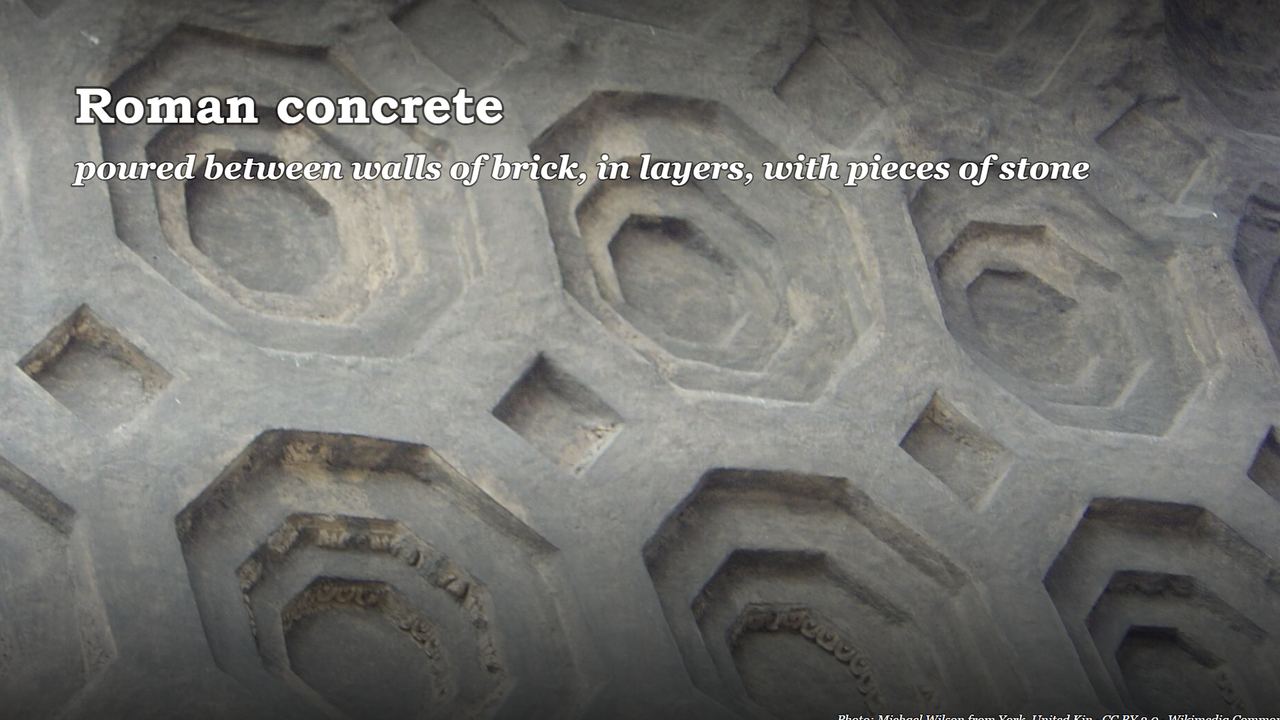
The Romans changed that, a little more than two thousand years ago. Near the city of Pozzuoli, they found a volcanic ash. When they mixed it with lime, the result was something new: a cement that became hard even under water, and stronger with time. They poured it between walls of brick, in layers, with pieces of stone.
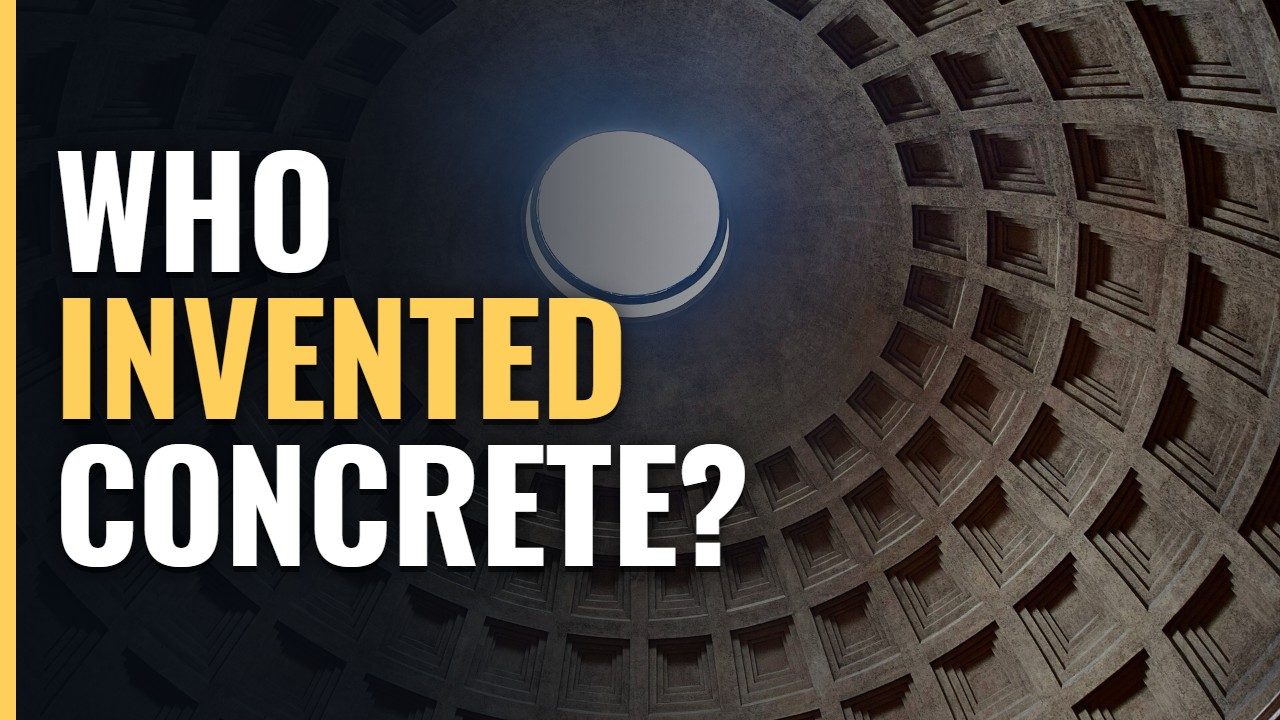
With this concrete, the Romans built harbours in the open sea, aqueducts, baths, and the dome of the Pantheon: 43 metres across, without a single bar of steel. It is still standing, about nineteen hundred years later.
Then the Roman empire fell, and the recipe was almost forgotten. For more than a thousand years, builders in Europe went back to stone, brick and weak lime mortar. The great cathedrals were built without concrete.
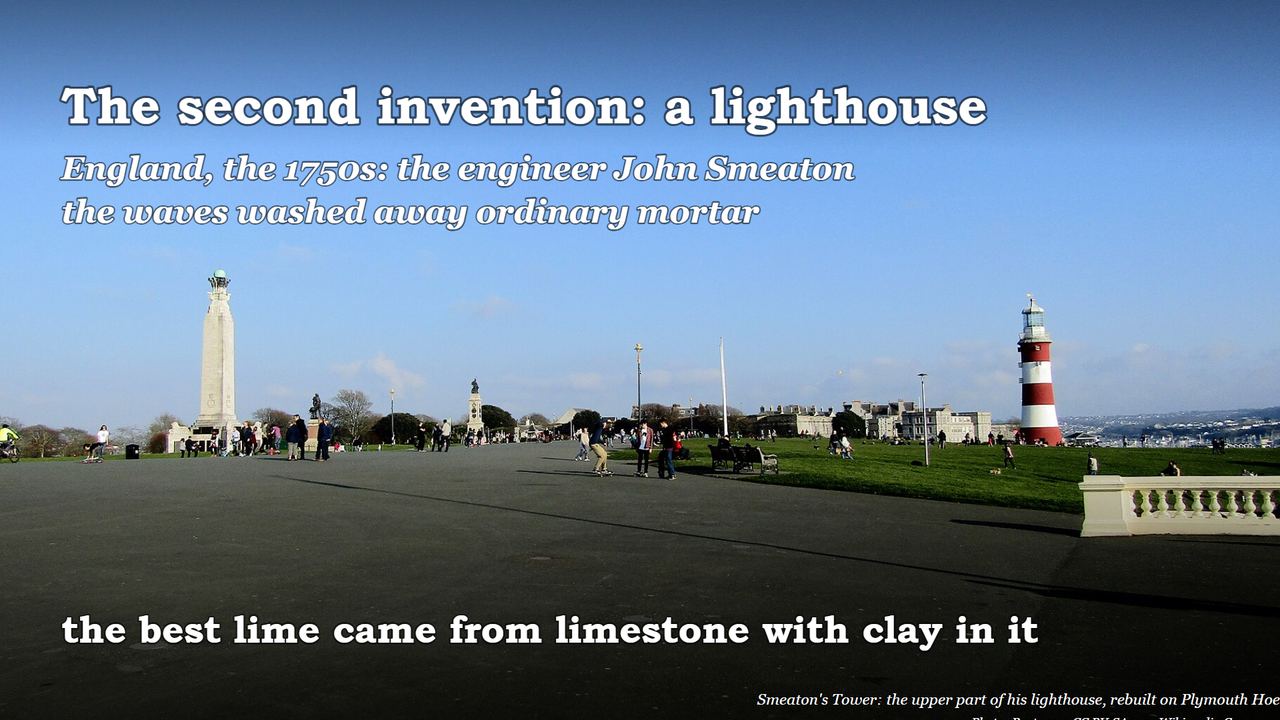
The second invention began in England, with a lighthouse. In the 1750s, the engineer John Smeaton had to build on a rock in the sea, where the waves washed away ordinary mortar. He tested many kinds of lime, and found something surprising. The best lime came from limestone that was not pure, but had clay in it. That lime hardened under water.
In 1824, a bricklayer from Leeds named Joseph Aspdin took the next step. He burned a mixture of limestone and clay, ground it to a powder, and patented it. He called it Portland cement, because the hard grey result looked like the stone from the island of Portland. Others soon learned to burn it at a much higher temperature, and that is the cement we still use today.
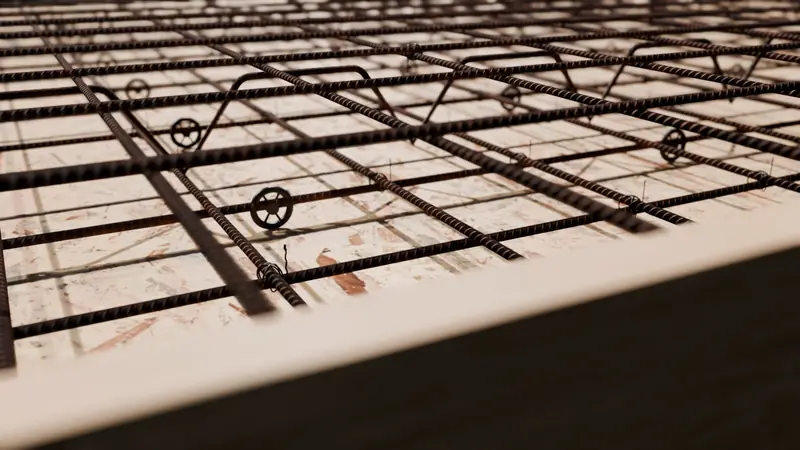
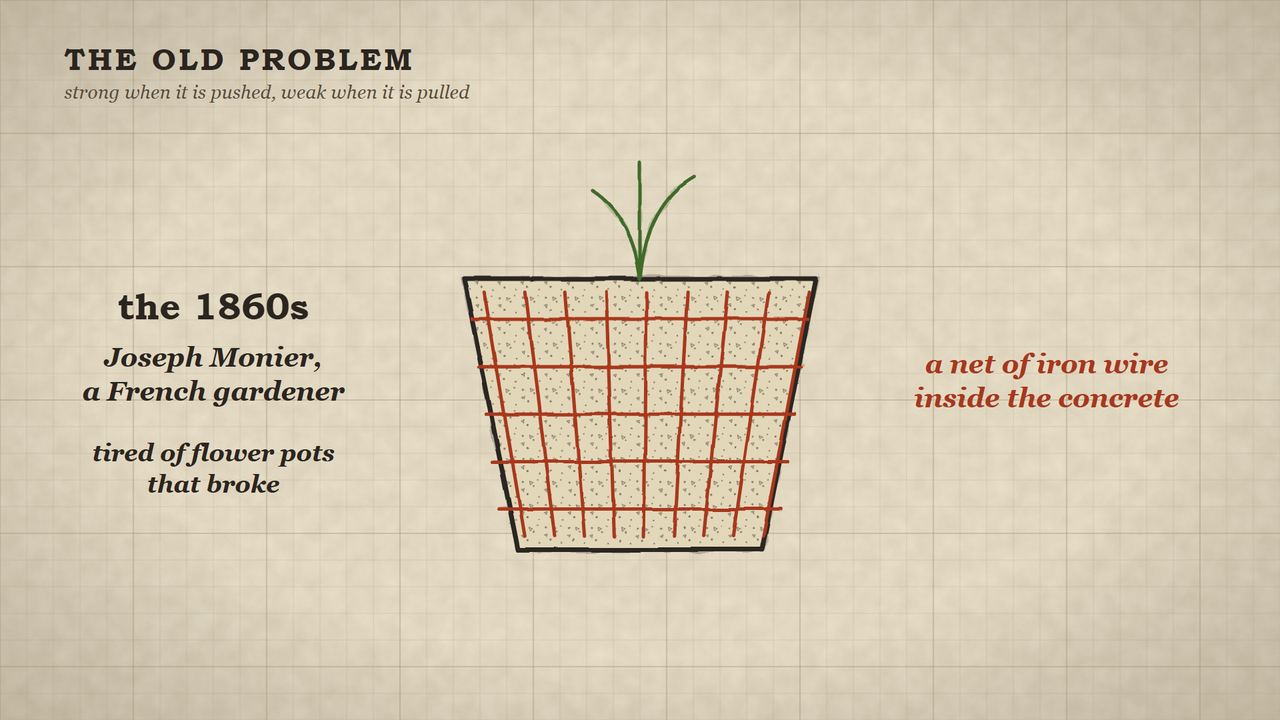
But concrete still had its old problem. It is strong when it is pushed, and weak when it is pulled. The answer came from an unexpected place. In the 1860s, a French gardener named Joseph Monier was tired of flower pots that broke. He put a net of iron wire inside the concrete, and patented the idea. Iron for the pulling, concrete for the pushing.
Engineers turned the flower pot into a system. In the 1890s, François Hennebique in France was building complete frames of reinforced concrete: columns, beams and floors, poured as one piece. In 1903, a concrete building of sixteen floors went up in Cincinnati. Many people expected it to fall. It is still there.
The next step came in the 1920s. Eugène Freyssinet stretched strong steel wires inside the concrete, so that the concrete was squeezed before any load arrived. This is prestressed concrete, and it made long bridges and thin floors possible.
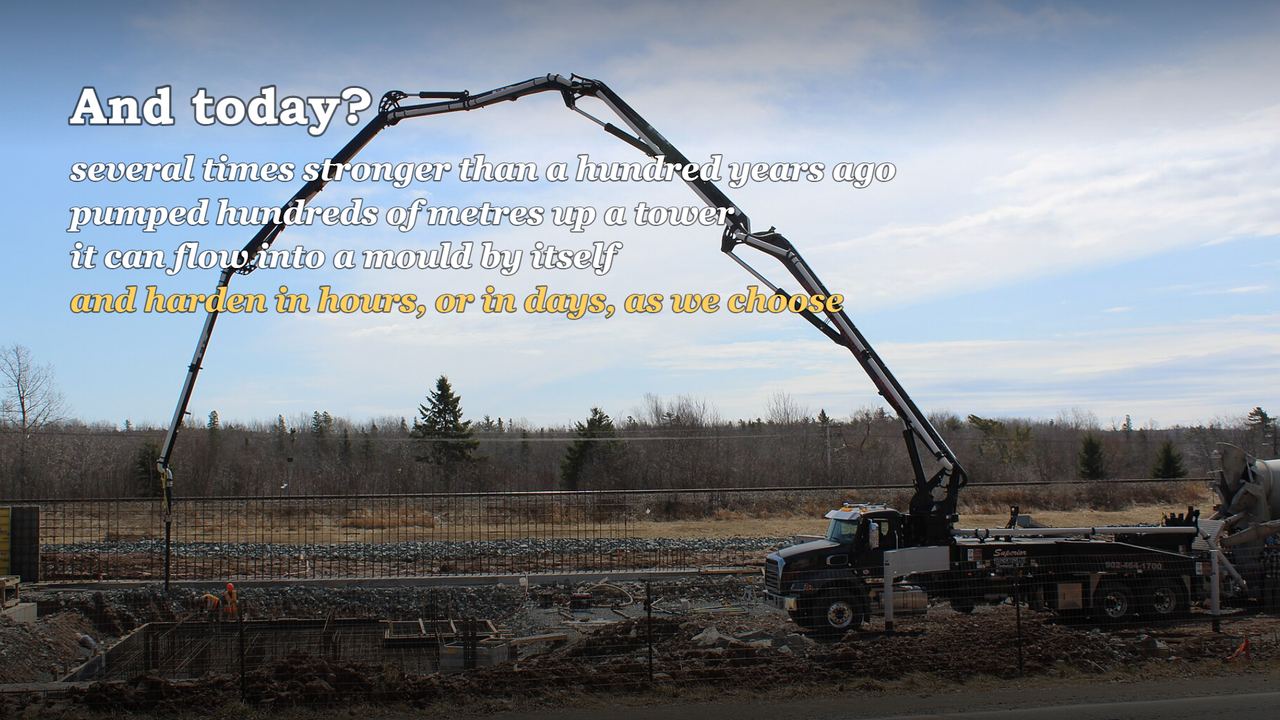
And today? Concrete can be several times stronger than it was a hundred years ago. It can be pumped hundreds of metres up a tower, flow into a mould by itself, and harden in hours, or in days, as we choose. But it has a price. Making cement is responsible for about eight percent of the carbon dioxide that people produce. So the next chapter in the story of concrete is already being written: how to make the glue with less heat, and less carbon.
This is The Bending Moment. Thank you for watching.
The Guide
Handed a set of plans and no one to check your takeoff?
How to Read Structural Drawings follows one beam, B2, from the plan to the section, the schedule and the general notes, then decodes it in the six rebar notations you will meet on real sets. Plans, not slides. Takeoffs, not bid theory.
#5H1616ØT16Ø16N1661 pages · 12 exercises with answers · about 100 abbreviations · PDF · one payment
Photo credits
- Concrete pump: MediaKyle, CC BY-SA 4.0
- Solfatara, Pozzuoli: Norbert Nagel, CC BY-SA 3.0
- Roman concrete vault: Michael Wilson from York, United Kingdom, CC BY 2.0
- The Pantheon dome: Ank Kumar, CC BY-SA 4.0
- Chester Cathedral: Michael D Beckwith, CC0
- Smeaton's Tower, Plymouth Hoe: Partonez, CC BY-SA 4.0
- Joseph Aspdin plaque, Leeds: ben dalton from leeds, uk, CC BY 2.0
- Rotary kilns: Dylan Moore, CC BY-SA 2.0
- Ingalls Building, Cincinnati: Hhelvey, CC BY-SA 4.0
- Precast bridge girder: RamaGaspar, CC BY-SA 4.0
- Cement plant: Dylan Moore, CC BY-SA 2.0
Photos from Wikimedia Commons under the licences listed. All drawings are original.
The narration uses an AI clone of the author's own voice. All drawings are original.