Concrete Curing Time: Setting vs Curing vs Strength Gain, and the 7-Day and 28-Day Numbers
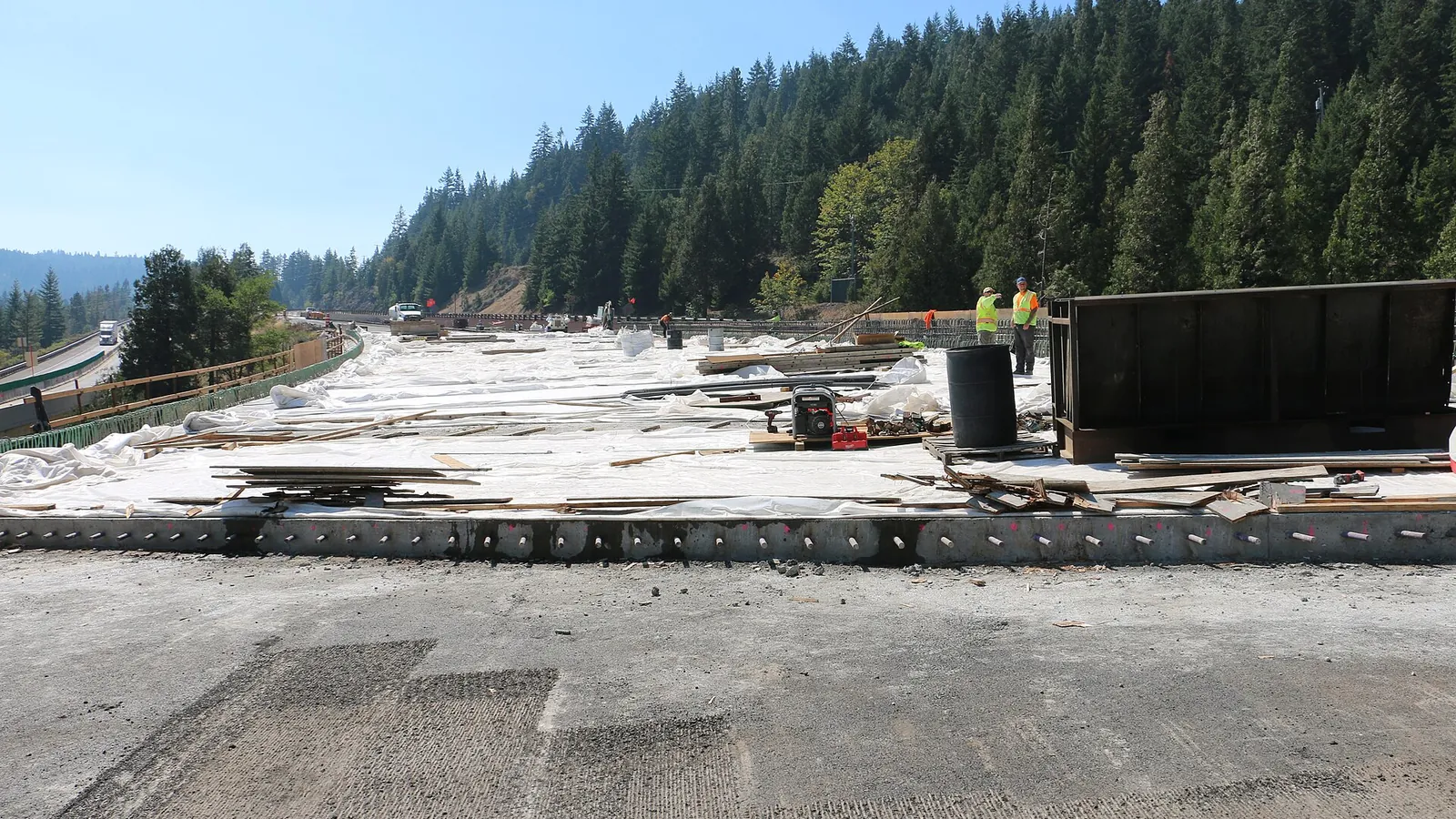
Concrete curing time is the period during which fresh concrete is kept moist and at a suitable temperature so the cement keeps hydrating and the concrete gains strength. A common default in US specifications, based on ACI 301, is 7 days of curing (3 days for high-early-strength concrete), while the design strength is measured at 28 days. Setting, which happens within hours, is a different thing from curing, and strength keeps increasing long after both.
People use "cured" loosely to mean "ready to use". On drawings and in specifications the three terms are separate, and mixing them up leads to stripped forms, loaded slabs and cracked surfaces too early.
Three different things: setting, curing, strength gain
Setting
Setting is the change from a plastic, workable mix to a solid. It is measured in a lab by pushing a needle into mortar sieved from the concrete (ASTM C403). Initial set is defined as the point where penetration resistance reaches 500 psi (3.5 MPa); final set is at 4,000 psi (27.6 MPa). Setting is measured in hours and is affected strongly by temperature and admixtures. After final set the concrete is hard but still weak.
Curing
Curing is something you do, not something that happens on its own. It means keeping the concrete moist and within a suitable temperature range so that hydration, the chemical reaction between cement and water, keeps going. If the surface dries out early, hydration near the surface slows or stops, and that layer ends up weaker, more permeable and more prone to cracking and dusting.
Common curing methods you will see in specifications:
- Water curing: ponding, sprinkling or fogging, or wet coverings such as burlap kept wet.
- Sheet materials: plastic sheeting or waterproof paper laid over the surface (ASTM C171).
- Liquid membrane-forming curing compounds: sprayed on to seal moisture in (ASTM C309).
- Leaving forms in place on walls and columns, which also slows drying.
Strength gain
Strength gain is the result. As long as there is moisture and the temperature is suitable, concrete keeps getting stronger for weeks and months, rapidly at first and then more slowly. That is why a reference age is needed for the "official" strength.
Why 28 days?
In ACI 318, the specified compressive strength, f'c, is based on 28-day test results unless the construction documents state a different age. By 28 days most ordinary concrete has gained most of the strength it will reach in normal service, and a fixed age lets everyone compare results on the same basis.
The specification may state a later age for some mixes, for example 56 days for concrete with a high content of supplementary materials such as fly ash or slag, which gain strength more slowly. If the general notes say "f'c = 5,000 psi at 56 days", that is the acceptance age for that concrete. See concrete strength in psi and MPa for how strength is written on drawings.
What the 7-day test tells you
Cylinders are often broken at 7 days (sometimes also at 3 days). According to ACI, these early-age results are used to monitor strength development, particularly with high-early-strength mixes, but they are not normally used for acceptance. A low 7-day result is an early warning that something may be wrong. It does not by itself fail the concrete, and a good 7-day result does not replace the 28-day test.
How much of its 28-day strength a mix reaches at 7 days varies with the cement, the supplementary materials and the temperature, so there is no single ratio you should rely on.
What the specification says about curing
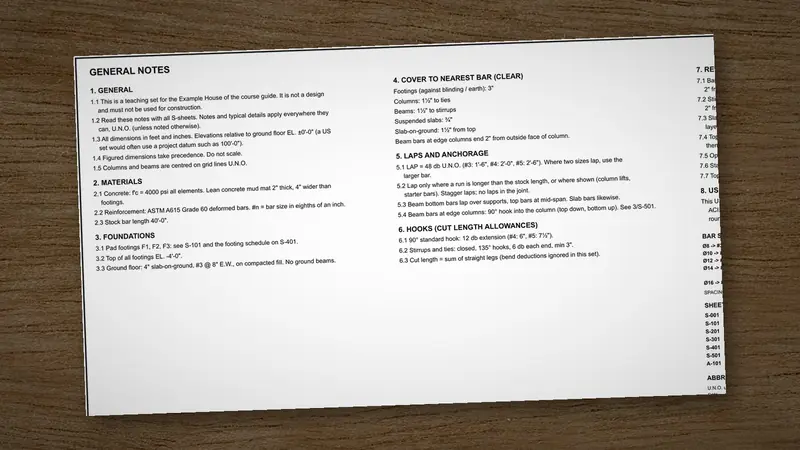
On the drawing you will usually find curing in the general notes or a reference to the concrete specification section. Typical content:
- The curing method(s) allowed, sometimes different for slabs, walls and decks.
- The curing duration. A common default in specifications based on ACI 301 is 7 days, or 3 days for high-early-strength concrete, with alternatives that allow curing to end once tests show the concrete has reached a stated fraction of its specified strength. ACI guidance has used 70% of the specified strength for that check.
- Cold-weather and hot-weather requirements, usually by reference to ACI 306 and ACI 305.
- Form removal criteria for suspended slabs and beams, which are a structural decision (often by strength, not by days) and belong to the engineer.
The project specification governs. The general notes on structural drawings article shows where these notes sit on a sheet.
How temperature changes curing time
Hydration is a chemical reaction, and temperature controls its speed.
Cold weather
In cold conditions concrete sets and gains strength slowly. ACI 306 treats it as cold weather when the air temperature has fallen, or is expected to fall, below 40°F (4°C) during the protection period. The main risk is freezing: concrete is generally protected from freezing until it reaches about 500 psi (3.5 MPa), and longer if it will be exposed to repeated freezing and thawing while wet. Specifications call for insulated blankets, heated enclosures, accelerating admixtures or heated materials, and longer curing.
Hot weather
Heat speeds up setting and early strength gain, but it also dries the surface quickly and shortens the time available to place and finish. Rapid drying increases the risk of plastic shrinkage cracking. Hot-weather concrete is covered in ACI 305, and specifications typically call for evaporation control, early curing, and sometimes cooled materials or set-retarding admixtures.
Wind, sun and humidity
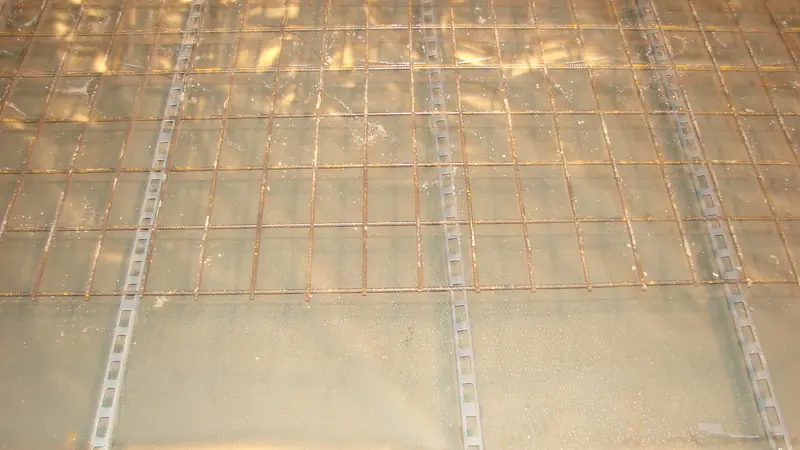
Low humidity, wind and direct sun all pull water out of the surface. That is why flatwork in particular needs curing to start as soon as finishing allows. Good curing reduces shrinkage cracking but does not eliminate it; joints and reinforcement handle the rest, as described in slab on grade reinforcement and concrete slab thickness.
Worked example: curing and acceptance dates for a slab
A suspended slab is specified with f'c = 4,000 psi (about 28 MPa) at 28 days, normal portland cement, and the project specification calls for 7 days of moist curing. The slab is poured on a Monday.
Step 1: curing period. Seven days of curing runs to the following Monday. Curing continues over the weekend; a common mistake is letting sheets blow off or a sprinkler stop on day 5.
Step 2: test ages. Cylinders cast on the pour day are typically broken at 7 days (the following Monday, for information) and at 28 days (four weeks after the pour, for acceptance).
Step 3: acceptance check. Typical ACI 318 acceptance criteria for f'c of 5,000 psi or less: every average of three consecutive strength tests must be at least f'c, and no single test may fall more than 500 psi below f'c. A "test" is the average of the cylinders broken at the same age (two 6 x 12 in or three 4 x 8 in cylinders). The project specification governs over these typical values.
Three consecutive 28-day tests come back at 4,150, 3,820 and 4,300 psi. - Average = (4,150 + 3,820 + 4,300) / 3 = 12,270 / 3 = 4,090 psi, which is at least 4,000. Pass. - Lowest single test = 3,820 psi. The limit is 4,000 - 500 = 3,500 psi. Pass.
Now suppose the tests were 4,100, 3,450 and 4,200 psi. - Average = 11,750 / 3 = 3,917 psi, below 4,000. Fails the first check. - 3,450 psi is below 3,500. Fails the second check too.
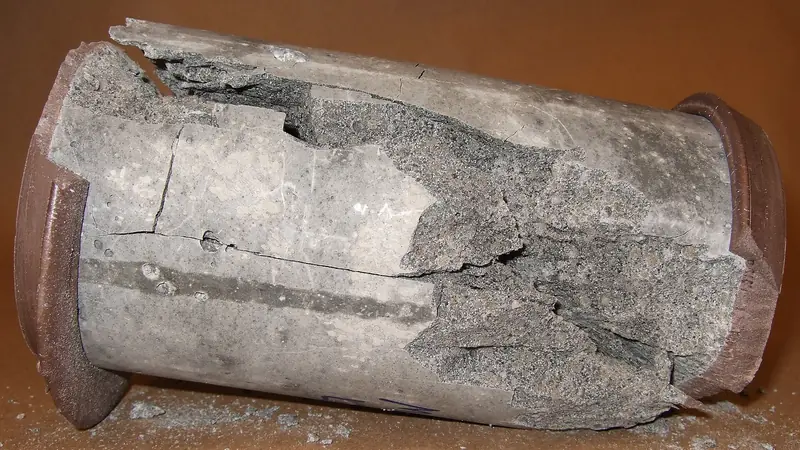
Low results start an investigation by the engineer: checking the testing, then possibly cores from the structure. A frequent finding in such investigations is cylinders that were not cured or handled properly, which is why the specification also controls how test cylinders are cured.
Common mistakes
- Treating "set" as "cured". Hard to the touch after a day does not mean strong.
- Starting curing late. On flatwork, the surface can dry within hours of finishing.
- Stopping curing early because the surface looks fine.
- Reading a 7-day result as pass or fail.
- Assuming the 28-day number applies when the notes give another age.
Frequently asked questions
How long does concrete take to cure?
It depends on the mix, the temperature and what the specification requires. A common specification default is 7 days of curing for normal concrete and 3 days for high-early-strength concrete, while the specified strength is usually measured at 28 days. Strength keeps increasing after that.
Is concrete fully cured after 28 days?
Not fully. 28 days is the standard reference age for measuring the specified strength, and concrete keeps gaining strength slowly beyond it as long as moisture is available. Some specifications use a later age, such as 56 days, for slower-gaining mixes.
What is the difference between setting and curing?
Setting is the stiffening of fresh concrete, measured in hours, with initial and final set defined by lab penetration tests. Curing is the action of keeping the concrete moist and at a suitable temperature so it keeps gaining strength, usually over days.
How long before I can walk or drive on new concrete?
There is no single number that fits every mix and weather. It depends on the concrete, the temperature and the loads, so follow the specification, your engineer or the concrete supplier's guidance. For structural elements, loading and form removal are based on strength criteria set by the engineer.
Does cold weather stop concrete from curing?
Cold slows hydration sharply, and freezing young concrete can damage it permanently. ACI 306 treats temperatures below 40°F (4°C) as cold weather and calls for protection; concrete is generally kept from freezing until it reaches about 500 psi.
This article explains general practice for learning purposes. On a real project, the drawings, the general notes and the governing code always win.