What Is #5 Rebar? Size, Diameter and Weight Explained
5 rebar is a reinforcing bar with a nominal diameter of 5/8 in (0.625 in, 15.9 mm), a cross-sectional area of 0.31 in² and a weight of 1.043 lb/ft (1.552 kg/m). The number is the diameter in eighths of an inch, which works for bar sizes #3 through #8.
Where you see #5 rebar on a drawing
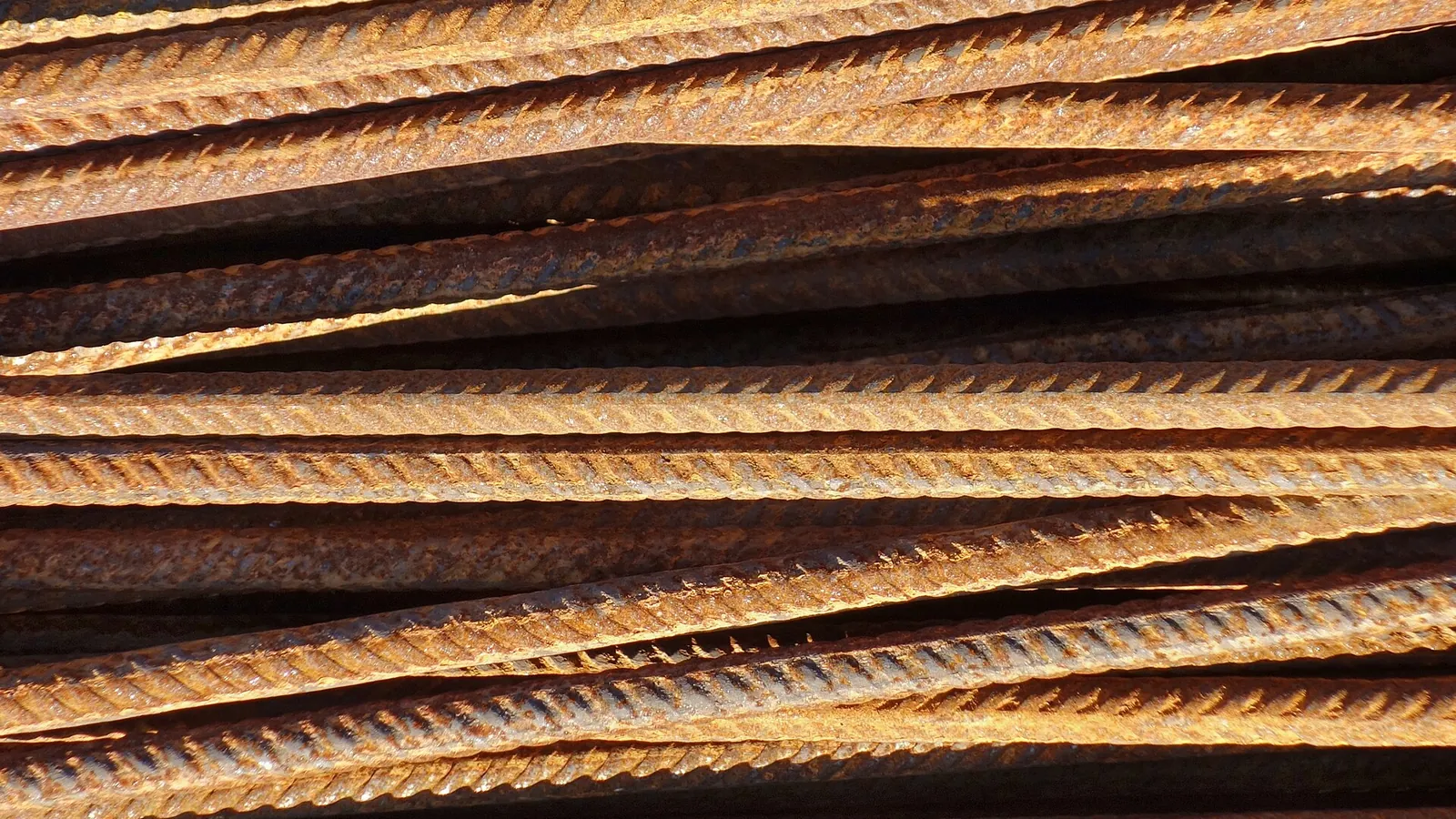
On a US structural drawing a #5 appears in callouts such as #5 @ 12" O.C. E.W. on a slab or footing, or (4) #5 CONT. T&B on a grade beam. In soft-metric documents the same physical bar is called #16 (16 mm). The bar itself carries rolled-on marks: a mill identification symbol, the size number "5", a letter for the steel type (S for ASTM A615, W for ASTM A706), and a grade mark (Grade 40 bars carry none).
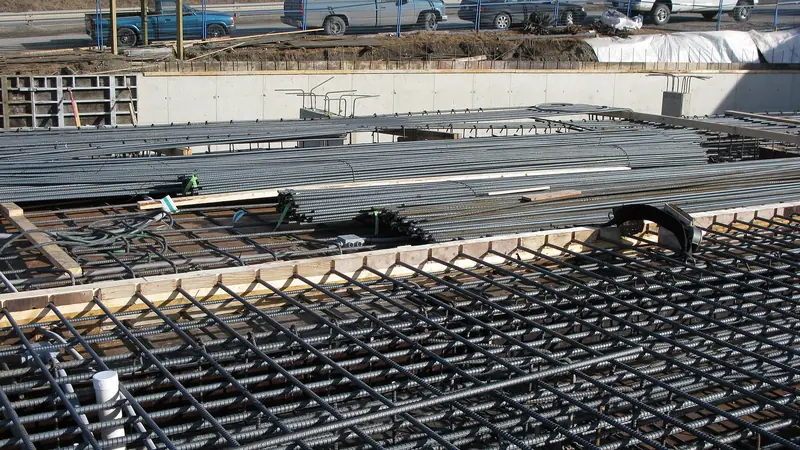
5 is one of the most common bar sizes in residential and light commercial work: footings, grade beams, slabs on grade with heavier loads, retaining walls and the vertical bars in many CMU walls. If you want the full chart for every size, see rebar sizes and weights.
#5 rebar properties
| Property | Value |
|---|---|
| Nominal diameter | 0.625 in (5/8 in), 15.9 mm |
| Cross-sectional area | 0.31 in² (199 mm²) |
| Weight | 1.043 lb/ft (1.552 kg/m) |
| Weight of a 20 ft bar | 20.9 lb |
| Weight of a 40 ft bar | 41.7 lb |
| Soft-metric name | #16 |
The nominal diameter is the diameter of a plain round bar with the same weight per foot. The outside diameter measured over the ribs is a little larger, so a caliper on a real bar will read more than 0.625 in.
Worked example: #5 bars in a footing
A continuous footing is 40 ft long and carries (3) #5 continuous bottom bars. Ignoring laps for the moment:
- Total length: 3 x 40 ft = 120 ft
- Weight: 120 ft x 1.043 lb/ft = 125.2 lb
- Stock bars: 20 ft bars would need laps; 40 ft bars may arrive as single lengths if the supplier stocks them.
Add laps and waste per your company's practice. The rebar weight calculation article explains the d² x 2.67 shortcut: 0.625² x 2.67 = 1.043 lb/ft.
A common mistake
The most frequent error is treating the bar number as millimetres or as a diameter in inches. "#5" is not 5 mm and not 5 in. Another is mixing a US #5 with a metric 16 mm bar on an international job: they are close (15.9 mm vs 16 mm) but listed under different standards, so confirm with the supplier which bar is actually delivered. For a side-by-side with the next size down, read #4 vs #5 rebar.
Frequently asked questions
Is #5 rebar the same as 5/8 rebar?
Yes. #5 rebar has a nominal diameter of 5/8 in. The two names describe the same bar size; "#5" is the designation used on drawings and in ASTM A615 and A706.
How much does a 20 ft piece of #5 rebar weigh?
A 20 ft #5 bar weighs about 20.9 lb (20 ft x 1.043 lb/ft). A 40 ft bar weighs about 41.7 lb. Use the rebar weight calculator for other lengths.
What is #5 rebar in metric?
The soft-metric designation is #16, meaning about 16 mm. The physical bar does not change; only the label does. Its area is 199 mm² and it weighs 1.552 kg/m.
This article explains general practice for learning purposes. On a real project, the drawings, the general notes and the governing code always win.