What Is f'c in Concrete? Specified Compressive Strength
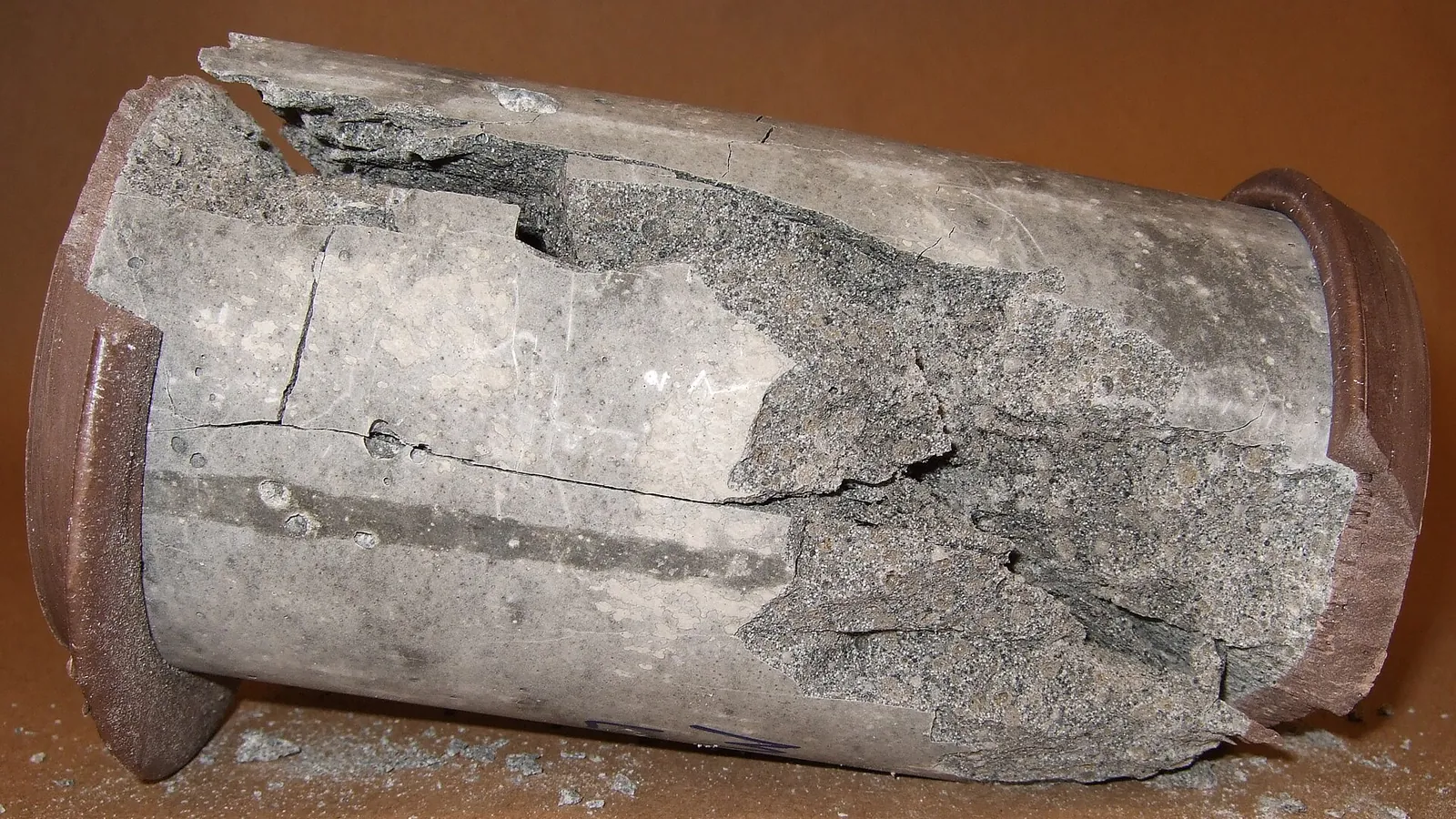
f'c ("f prime c") is the specified compressive strength of concrete: the strength the engineer uses in design and the strength the concrete must reach, normally tested at 28 days. On US drawings it is written in psi, for example f'c = 4,000 psi; in metric it is in MPa.
Where you see it on a drawing
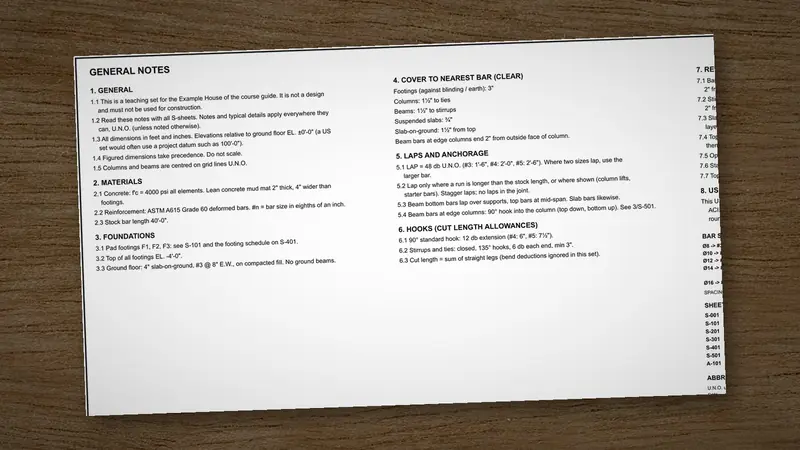
f'c is set in the general notes, usually as a short table by element: footings, walls, columns, slabs, each with its own value. Some sets add a different age for high-strength mixes, such as 56 days. The mix supplier designs a mix that reaches f'c with a margin, and the testing lab checks it with cylinders. The general notes article shows where to look.
How it is checked
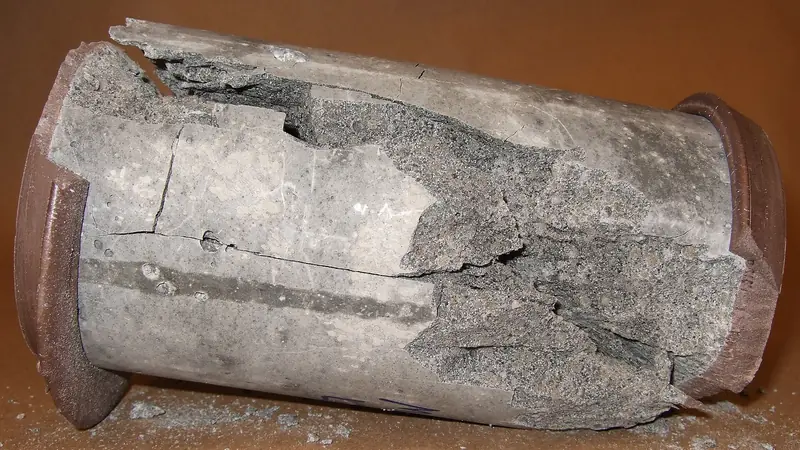
A strength test is the average strength of cylinders made from the same sample and tested at the specified age: typically two 6 x 12 in cylinders or three 4 x 8 in cylinders. As a typical ACI 318 acceptance rule, the strength level is satisfactory when the average of any three consecutive tests is at least f'c, and no single test falls more than 500 psi below f'c (for f'c up to 5,000 psi). The project specification and the governing code edition decide the exact criteria.
Common f'c values and metric conversion
| f'c (psi) | Approx. MPa |
|---|---|
| 2,500 | 17.2 (the ACI 318 minimum for structural concrete) |
| 3,000 | 20.7 |
| 4,000 | 27.6 |
| 5,000 | 34.5 |
| 6,000 | 41.4 |
| 8,000 | 55.2 |
The engineer sets f'c for each element based on loads, durability and exposure, so do not assume a value from the element type. Conversion: 1 MPa = 145.04 psi. The concrete strength in psi and MPa article also covers cylinder vs cube classes such as C25/30.
Worked example: converting and reading a test
The notes say f'c = 4,000 psi for slabs.
- In MPa: 4,000 / 145.04 = 27.6 MPa
- Three consecutive tests come back at 4,350, 3,700 and 4,250 psi.
- Average: (4,350 + 3,700 + 4,250) / 3 = 4,100 psi, which is at least 4,000. OK.
- Lowest single test: 3,700 psi. f'c minus 500 = 3,500 psi, and 3,700 is above it. OK.
Both checks pass under the typical rule above, even though one test was below 4,000 psi.
A common mistake
Expecting every cylinder to reach f'c and raising an alarm at one low result. The acceptance rules are built on averages with a set allowance for a single test. The opposite mistake is reading 7-day results as failures: early strength is lower by nature, which is why the specified age is usually 28 days. Concrete curing time explains how strength grows.
Frequently asked questions
What does the prime in f'c mean?
It is just notation, used to tell the specified compressive strength apart from other stresses written with f. Read it as "f prime c".
Is f'c the same as the strength of the concrete in the building?
Not exactly. f'c is the specified value. The actual mix is designed to reach a higher average, and the concrete in place depends on placing, compaction and curing.
Why is concrete strength tested at 28 days?
28 days is the standard reference age used in design codes and specifications. The engineer can specify a different age, such as 56 days, for some mixes.
This article explains general practice for learning purposes. On a real project, the drawings, the general notes and the governing code always win.