Why It Fell · No. 13
Tacoma Narrows
Why a Brand-New Bridge Twisted Itself Apart
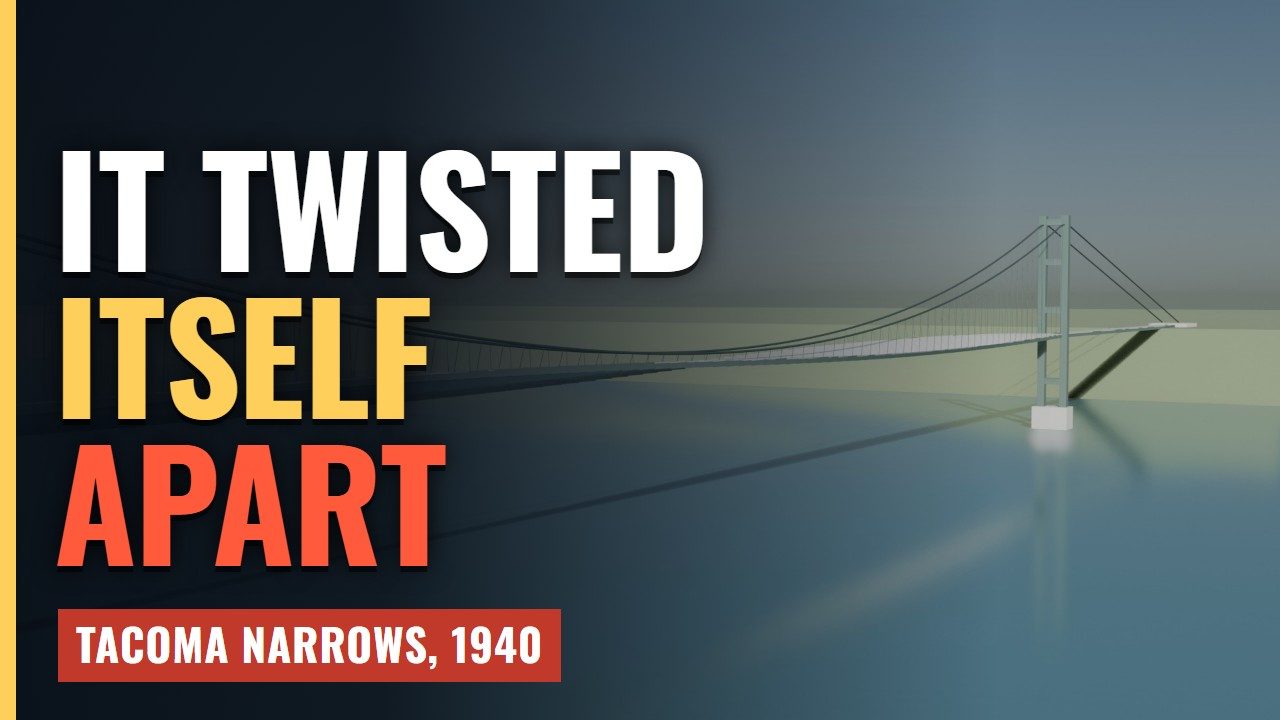 Video coming soon. Full article below
November 1940. A suspension bridge only four months old twists in a moderate wind for about an hour, and then its main span falls into the water.
For years textbooks called it resonance. It was not. This video explains the shape of the deck, why solid girders behaved like a wall in the wind, what flutter is, and why every long bridge since then meets a wind tunnel before it is built.
The full story
November 1940, in the north-west of the United States. A suspension bridge, only four months old, is twisting in the wind like a ribbon. One side of the road rises, while the other side falls. An hour later, the middle of the bridge breaks, and drops into the water.
The Tacoma Narrows Bridge was the third longest suspension bridge in the world. Its main span was 853 metres. And it was famous even before it opened, because it moved. On windy days the road rose and fell in slow waves. The builders gave it a name: Galloping Gertie.
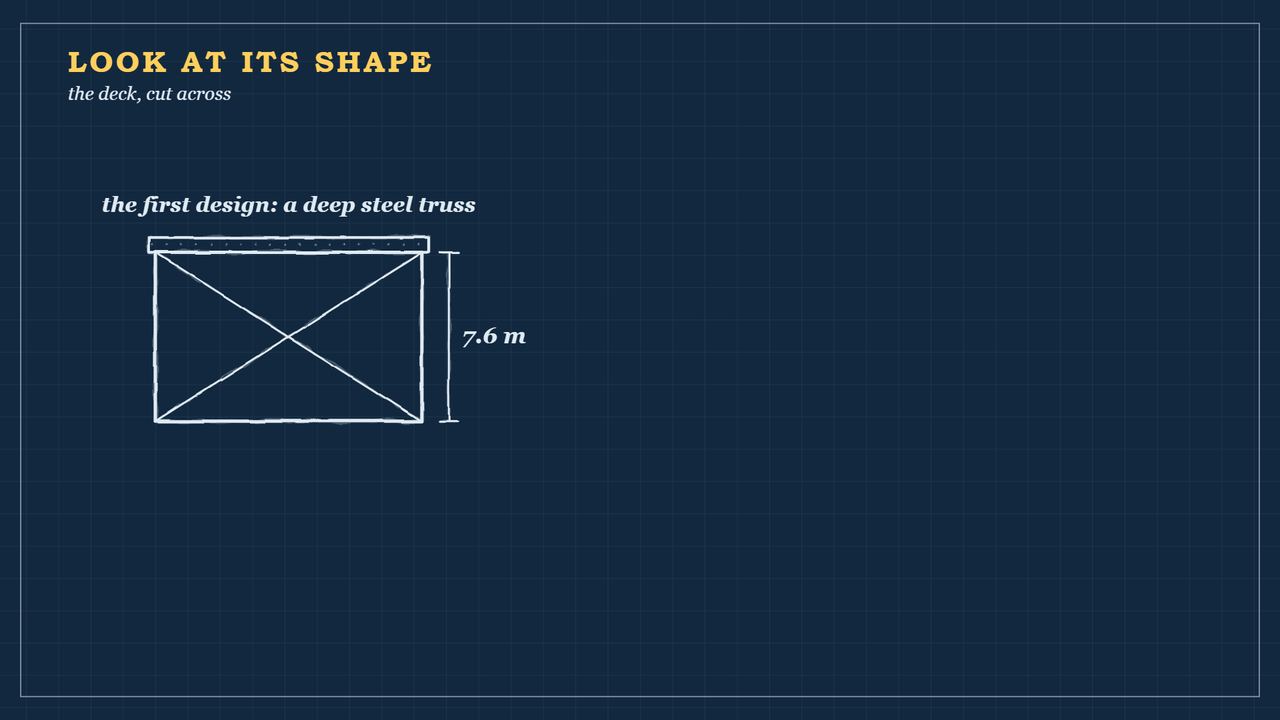
Why did it move so much? Look at its shape. The first design had a deep steel truss under the road, more than seven metres high. That was expensive. A famous designer offered something cheaper and more elegant: two flat steel girders, only 2.4 metres deep. The bridge was built that way. It was very long, very narrow, and very thin.
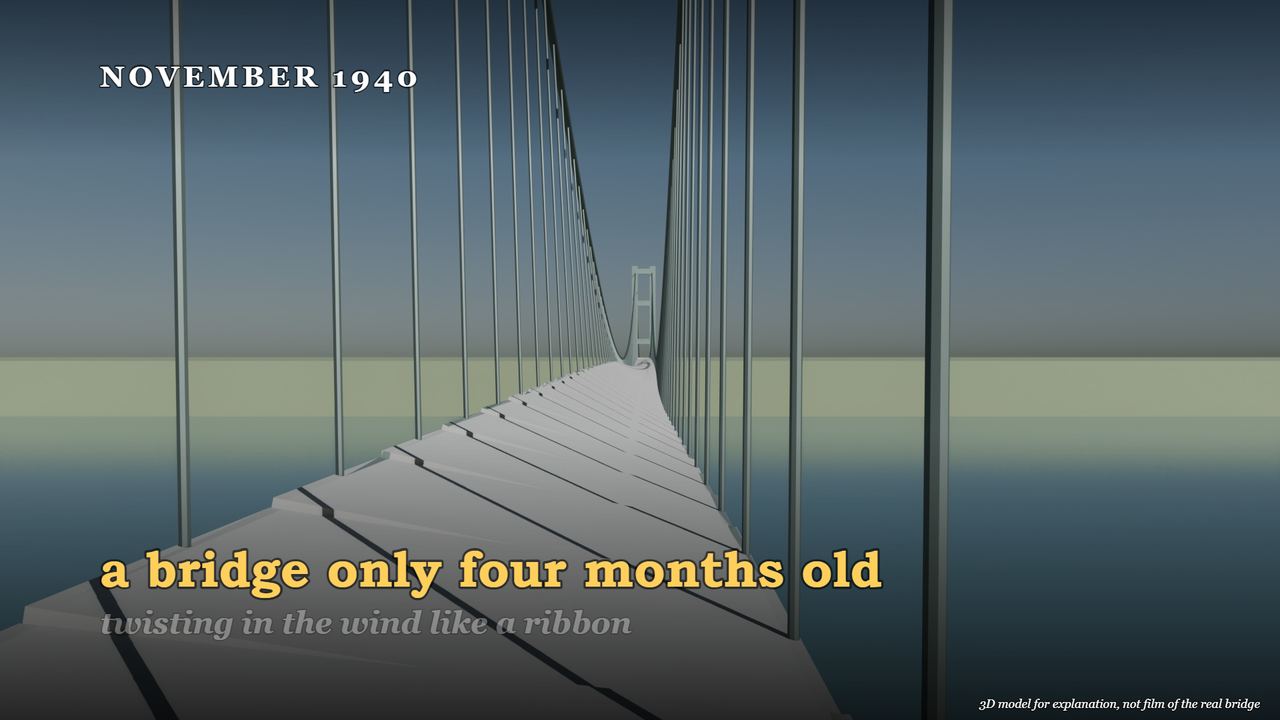
A deck like that is easy to bend, and even easier to twist. And its solid sides were like a wall in the wind. The air could not pass through, the way it passes through an open truss. It had to go over and under.
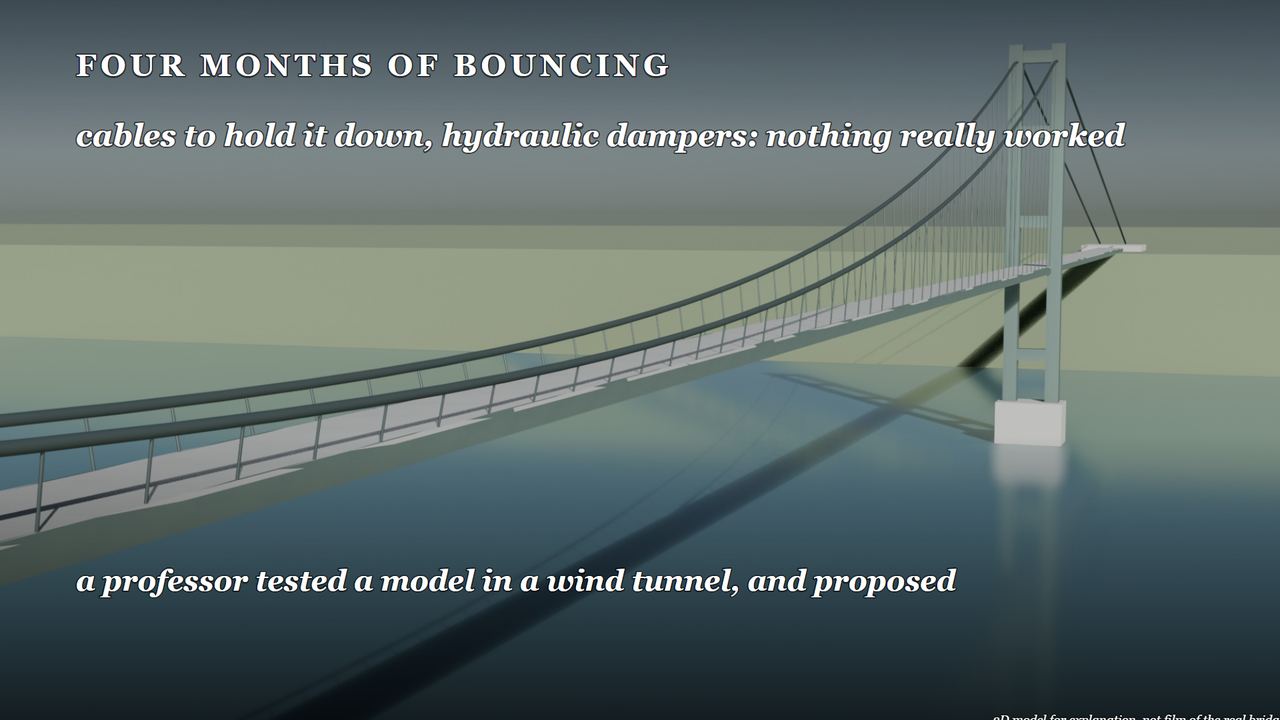
For four months, the bridge only bounced up and down. The engineers tried cables to hold it down, and hydraulic dampers. Nothing really worked. A professor built a model, tested it in a wind tunnel, and proposed to cut holes in the girders, or to add curved covers that would let the wind slide past. His report was ready five days before the end.
On the morning of the seventh of November, the wind was about 64 kilometres an hour. Strong, but far from a storm. Then the movement changed. The deck stopped bouncing, and started to twist.
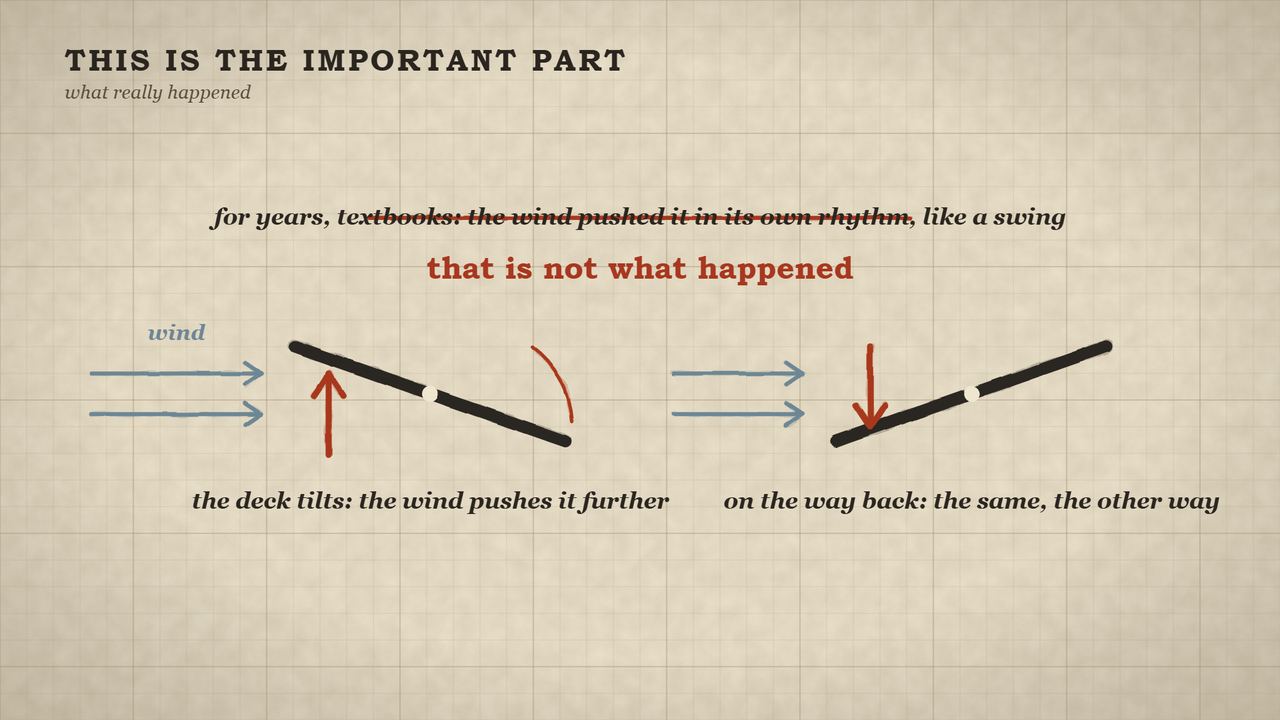
This is the important part. For years, textbooks said that the wind pushed the bridge in its own rhythm, like a child on a swing. That is not what happened. The twisting fed itself. When the deck tilted, the wind pushed on it at a new angle, and that push twisted it further. On the way back, the same thing happened in the other direction. Each twist took more energy from the wind than the bridge could lose. Engineers call it flutter.
Once it starts, flutter does not need a stronger wind. It grows by itself, as long as the wind keeps blowing. The deck twisted for about an hour, until the steel hangers broke, and the middle of the span fell into the water.
Nobody died. One car was left on the bridge, and the only victim was a dog that was too frightened to leave it.
The bridge was rebuilt ten years later, this time with a deep, open truss that the wind can pass through. And since then, the shape of a long bridge is tested in a wind tunnel, long before it is built.
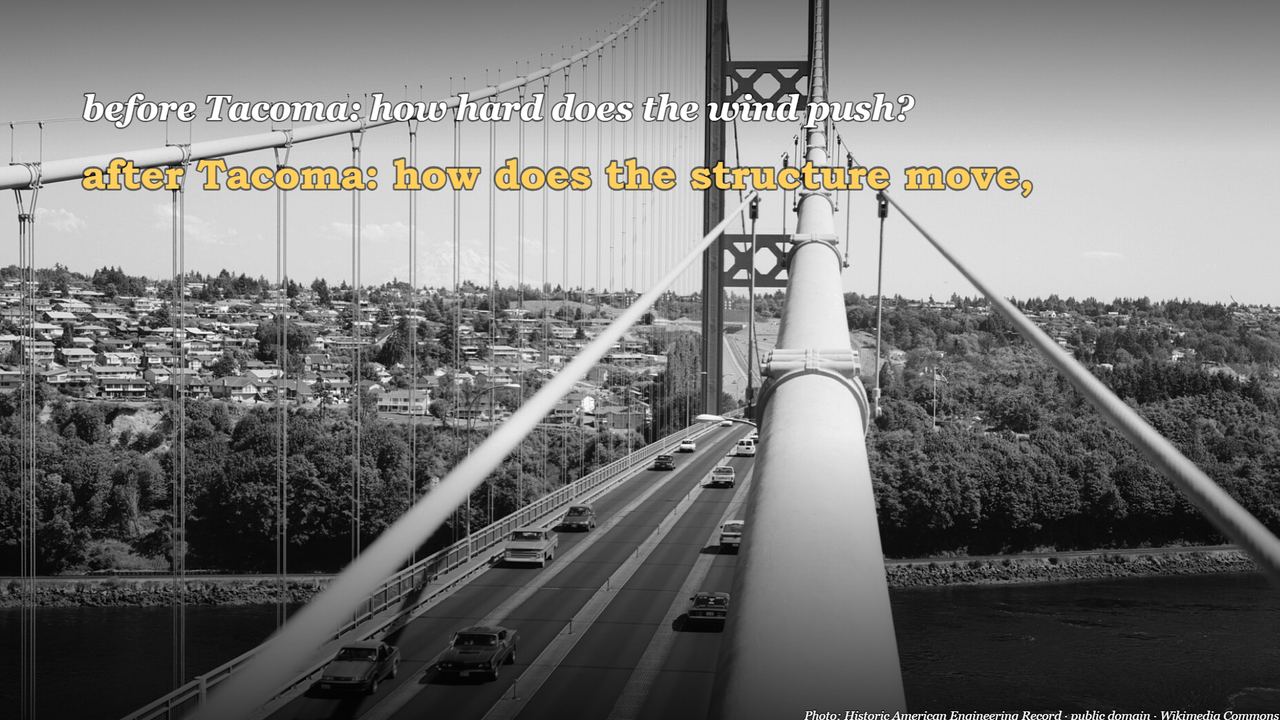
Before Tacoma, engineers asked one question about the wind: how hard does it push? After Tacoma, they ask a second one: how does the structure move, and what does that movement do to the wind? A bridge can be strong enough, and still fail, because it is too light and too flexible.
This is The Bending Moment. Thank you for watching.
The Guide
Handed a set of plans and no one to check your takeoff?
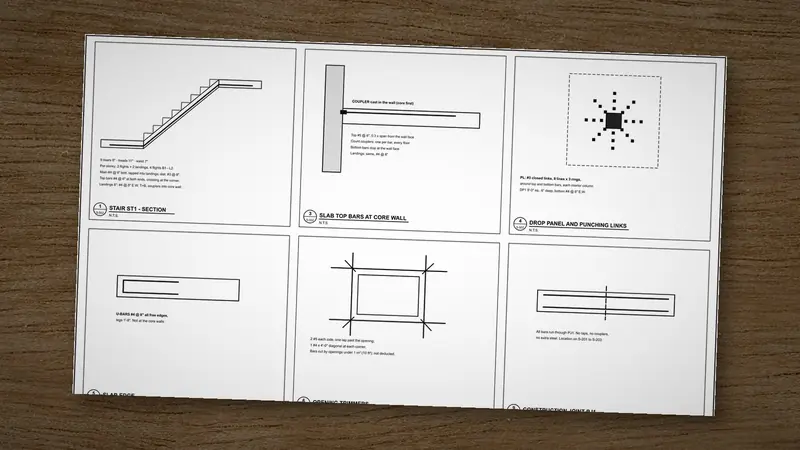
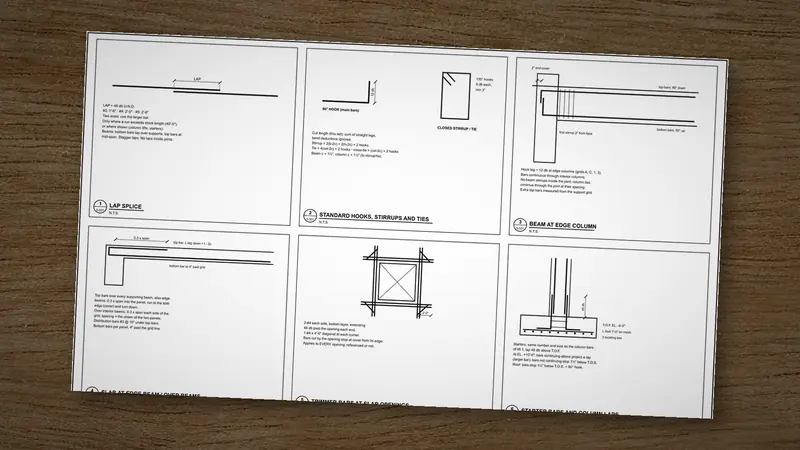
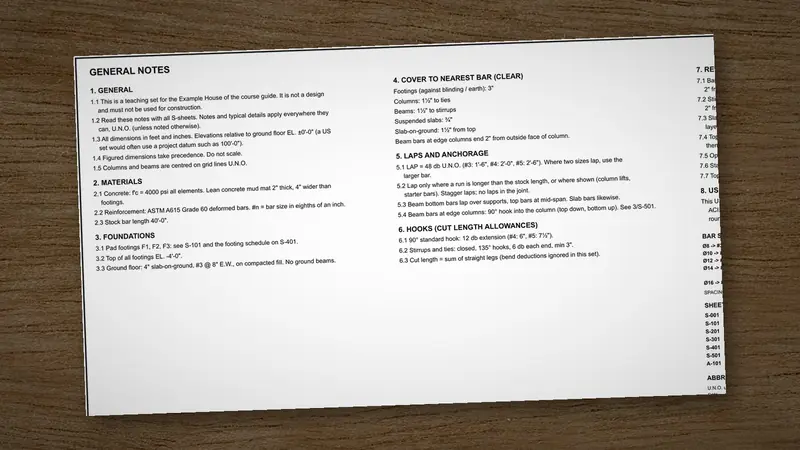
How to Read Structural Drawings follows one beam, B2, from the plan to the section, the schedule and the general notes, then decodes it in the six rebar notations you will meet on real sets. Plans, not slides. Takeoffs, not bid theory.
#5H1616ØT16Ø16N1661 pages · 12 exercises with answers · about 100 abbreviations · PDF · one payment
Sources
- the Wikipedia article "Tacoma Narrows Bridge (1940)" and the works it cites.
Photo credits
- The Tacoma Narrows bridges today: Doncamp, CC BY-SA 4.0
- View from the tower of the 1950 bridge: Jet Lowe, Historic American Engineering Record, public domain
Photos from Wikimedia Commons under the licences listed. All drawings are original.
The narration uses an AI clone of the author's own voice. All drawings are original.