Why It Fell · No. 38
The Dam That Failed the Night It Was Inspected
St. Francis Dam, 1928
 Video coming soon. Full article below
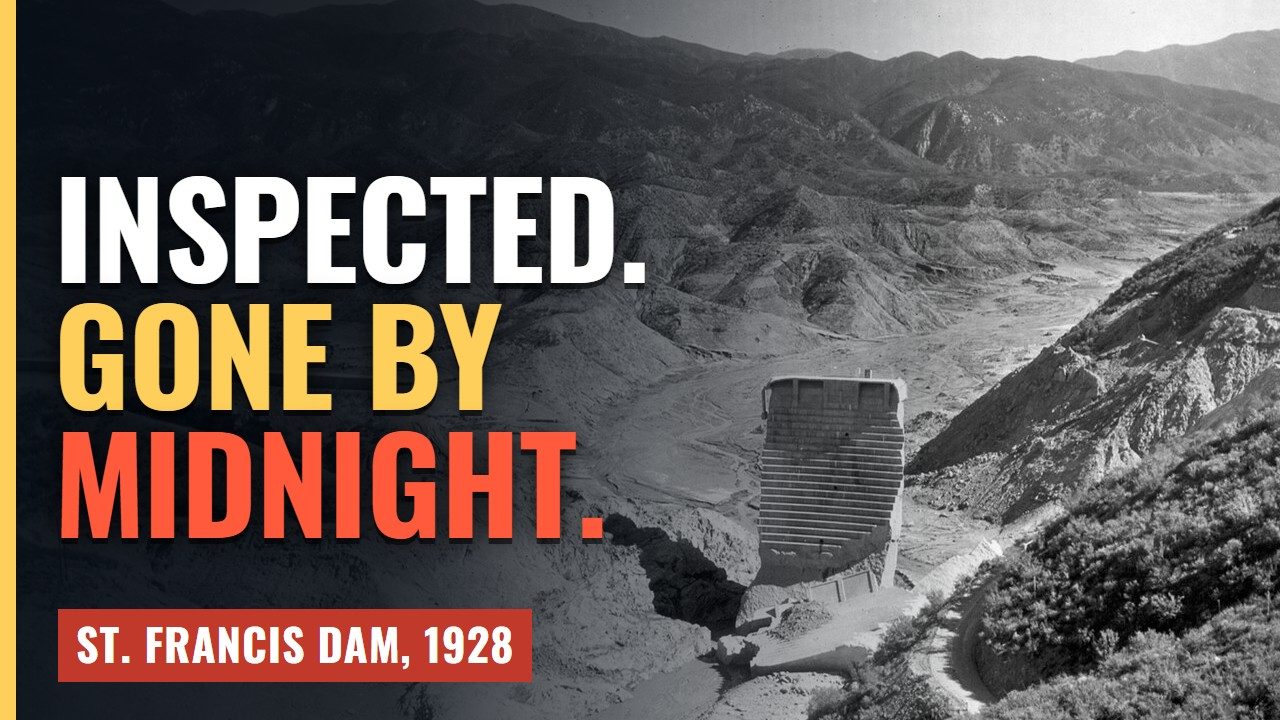
Why did the St. Francis Dam fail? On the morning of 12 March 1928, the chief engineer of Los Angeles inspected a new leak and found nothing dangerous. A few minutes before midnight, the dam collapsed.
This video explains uplift: water that gets into the rock under a gravity dam and pushes up on it. With one simple free-body diagram, we compare the same dam with and without water underneath, and see how it goes from safe to sliding. Then the story of the dam, the poor foundation rock, the flood that reached the Pacific, the investigations, and how California changed its dam-safety law in 1929.
More than four hundred people lost their lives. This video tells their story with respect, and without images of victims.
The full story
On the morning of the twelfth of March, nineteen twenty eight, the most famous water engineer in Los Angeles drove up a canyon to look at a leak in his dam. He looked for about two hours. He decided it was safe. A few minutes before midnight, the dam was gone. And a wall of water was on its way to the sea.
How can an engineer look at a dam in daylight, and miss what kills it that night? Here is the short answer. The danger was not in the concrete he could see. It was under it, and beside it. Water was getting into the rock under the dam, and pushing up. Engineers call that push uplift. And a heavy dam that is being pushed up is a dam that is starting to lose its grip on the ground.
The dam was the St. Francis Dam, in San Francisquito Canyon, in the hills north of Los Angeles. It was built by the city's own water department, between nineteen twenty four and nineteen twenty six. Its chief engineer was William Mulholland, the man who had built the aqueduct that brought water to the city. The dam was made of concrete, about fifty six metres high, and it held about forty seven million cubic metres of water.
It was a gravity dam. That means it holds back the water with nothing but its own weight. No cables, no steel bars inside, no anchors in the rock. Just a huge wedge of concrete, sitting on the ground. To see why that works, and how it can fail, let us draw it.
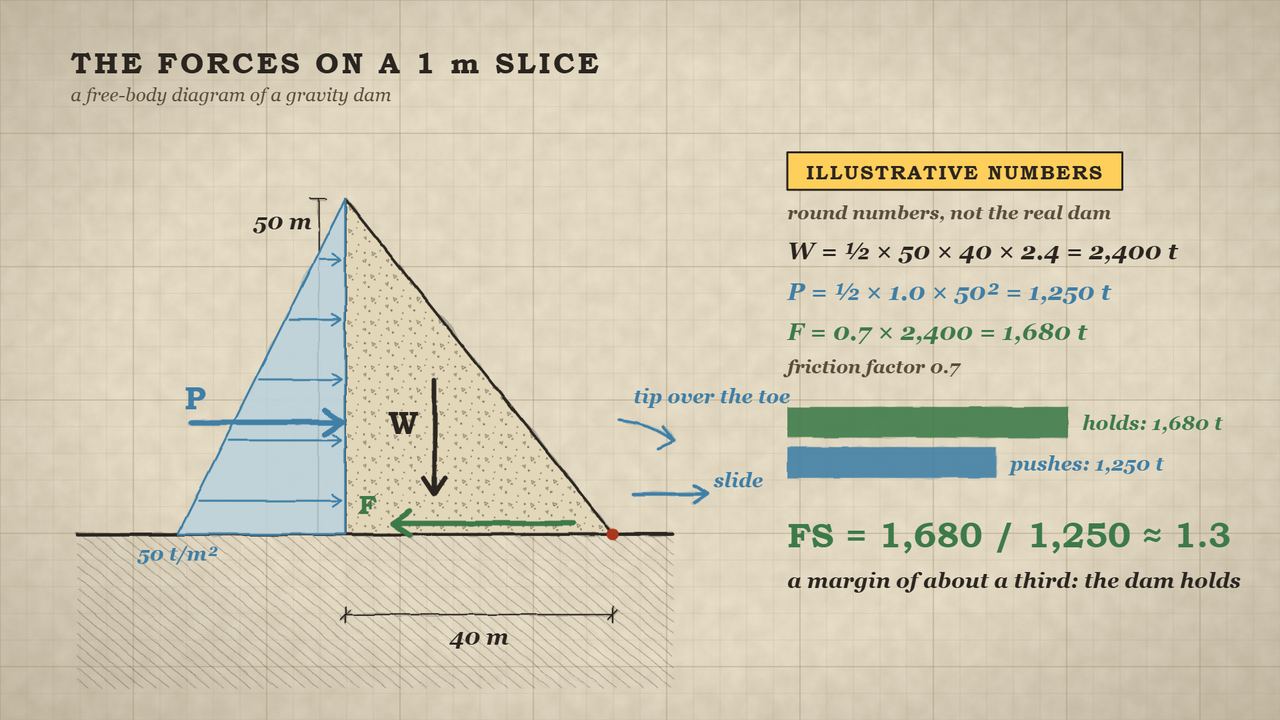
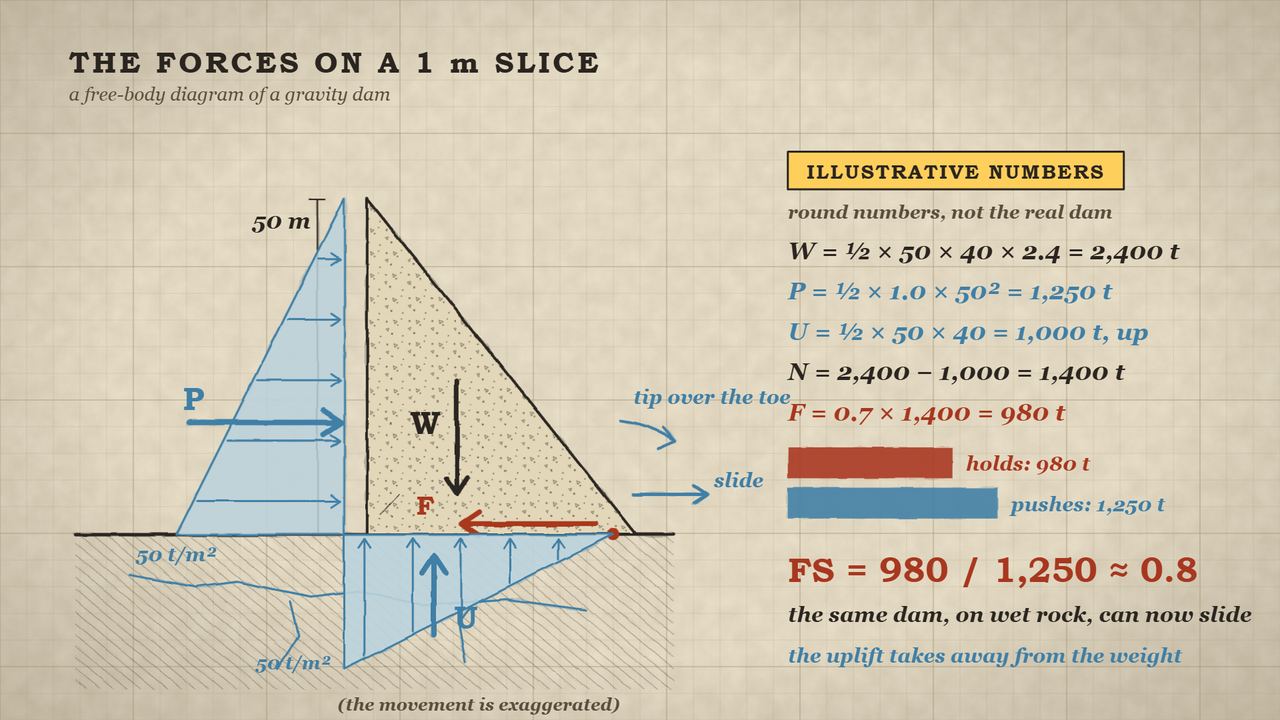
Take a slice of the dam, one metre long, and look at the forces on it. Our numbers are round, and for illustration only. They are not the real dam. Say the dam is fifty metres high, and its base is forty metres wide. It is roughly a triangle. Its weight is about two thousand four hundred tonnes, pushing straight down.
Now the water. Water pressure grows with depth. At the bottom of fifty metres of water, every square metre feels about fifty tonnes. Add it up over the whole height, and the water pushes the dam sideways with about one thousand two hundred and fifty tonnes. That push is trying to slide the dam downstream. And because it acts low down, it is also trying to tip the dam over its toe.
What holds the dam in place? Friction, between the concrete and the rock. Friction depends on how hard the dam presses on the ground. Say the friction factor is zero point seven. Then the dam's weight can resist about one thousand six hundred and eighty tonnes. The water pushes with one thousand two hundred and fifty. So the dam holds, with a margin of about a third. So far, so good.
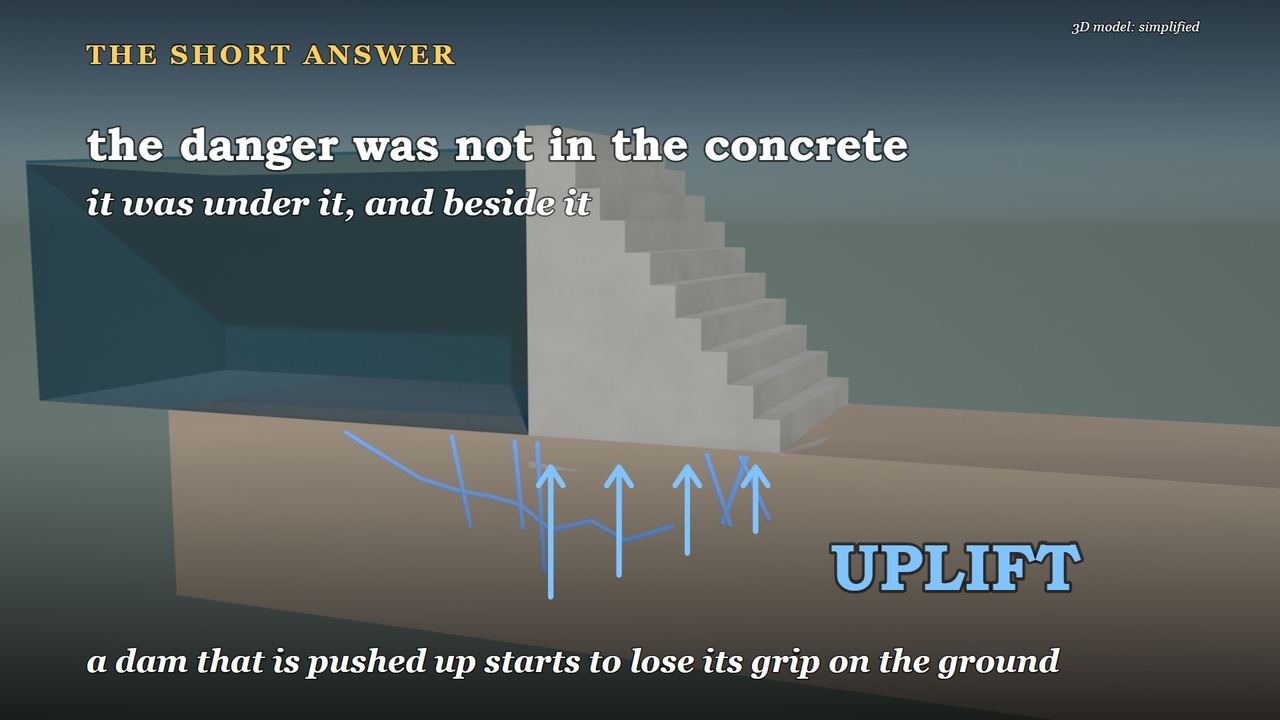
Now let the water get under the dam. It seeps into cracks in the rock, and it pushes up on the base. If the rock is full of water, the pressure under the upstream edge can be almost the full fifty tonnes per square metre, falling to nothing at the downstream edge. Over a base forty metres wide, that is about one thousand tonnes, pushing up.
And here is the trap. The uplift does not add to the dam's weight. It takes away from it. The dam now presses on the rock with only one thousand four hundred tonnes. Friction can resist about nine hundred and eighty tonnes. But the water is still pushing with one thousand two hundred and fifty. Nothing about the concrete has changed. The same dam, on wet rock, can now slide.
That is why modern gravity dams have drains in the rock, to let this water out, and curtains of grout, to keep it from getting in. And it is why the rock under a dam matters as much as the dam itself. According to later studies, the St. Francis Dam had relief drains only under its central part, and no grouting of its foundation.
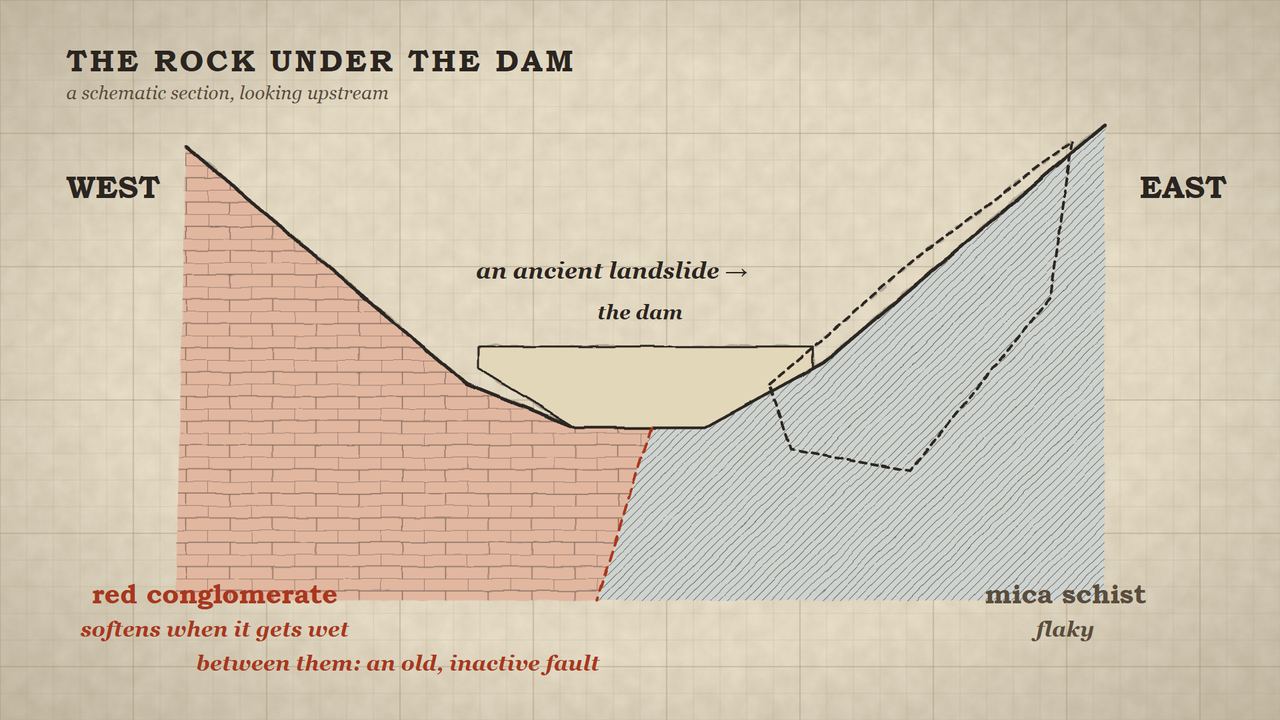
And the rock at St. Francis was poor. On the west side of the canyon, the dam stood on a red conglomerate, a rock that softens when it gets wet. On the east side, and under the canyon floor, it stood on a flaky mica schist. The line between the two rocks was an old, inactive fault. Much later, geologists found that the east side of the canyon was also an ancient landslide.
There was another problem. During the planning and building, the dam was made taller, and the reservoir grew from about thirty thousand to thirty eight thousand acre feet. A taller dam faces more water. But according to later studies, its base was not made wider to match.
By early March nineteen twenty eight, the reservoir was almost full, only a few centimetres below the spillway. Cracks and leaks had been seen before, and were treated as normal for a dam of this size. On the morning of the twelfth, the dam keeper found a new leak on the west side, and called Mulholland. Mulholland came with his assistant, Harvey Van Norman. They watched the water for about two hours. They found nothing they thought was dangerous, and drove back to the city.
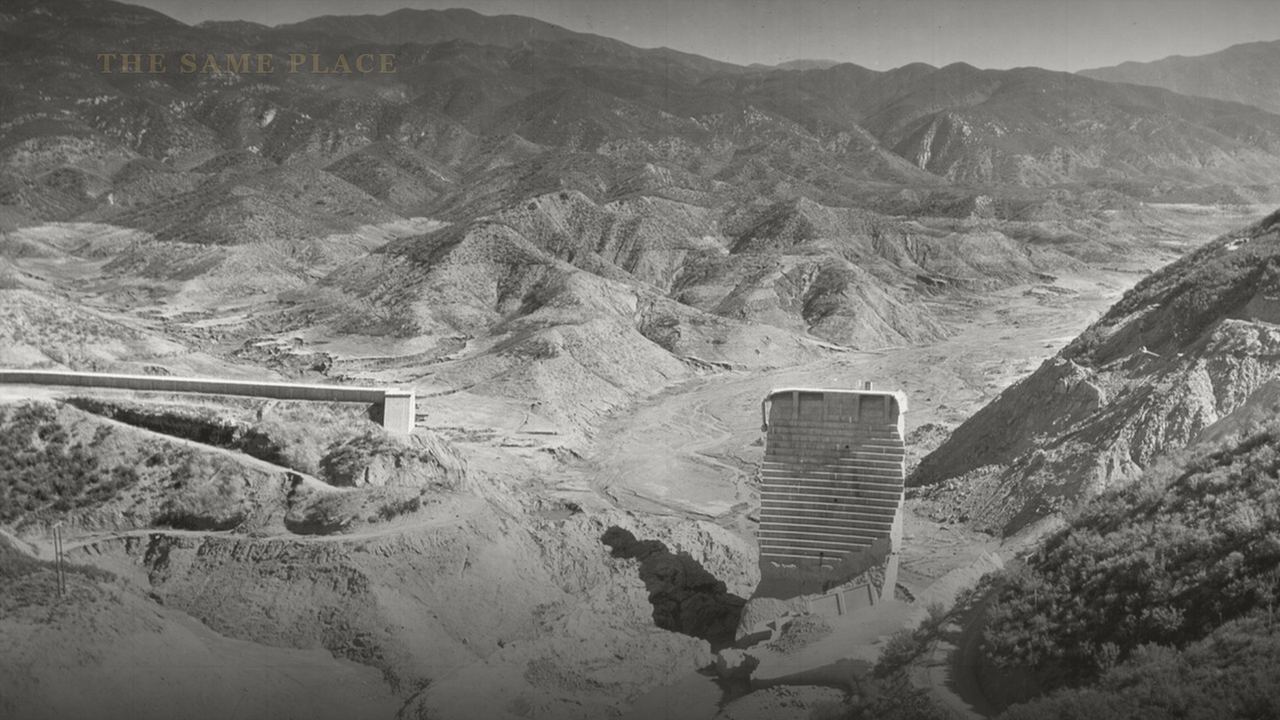
At about three minutes before midnight, the dam failed. The centre section stayed standing. Almost everything else broke apart and was carried away. Five minutes later, a wave about thirty seven metres high had reached a power station two and a half kilometres downstream, and destroyed it.
The water ran down the canyon, into the Santa Clara River valley, and on through farms, camps and towns, including Fillmore and Santa Paula. At about half past five in the morning, it reached the Pacific Ocean, about eighty seven kilometres from the dam. By then, the flood was about three kilometres wide.
More than four hundred people died. Many of them were asleep. Many were never found. The exact number is still not known. The official count in August nineteen twenty eight was three hundred and eighty five. A careful study, published much later, identified four hundred and thirty one victims. It is one of the deadliest engineering failures in American history.
Mulholland took the blame on himself. At the inquest he said, the only ones I envy about this thing are the ones who are dead. The coroner's jury found an error in engineering judgement, by the city's water department, but no crime. A state commission found that the foundation under the whole dam left very much to be desired. Mulholland retired at the end of that year.
Engineers still argue about which side failed first. The commission in nineteen twenty eight blamed the soft rock on the west side. Later research points to the old landslide on the east side, lifted and loosened by water. Most agree on the main lesson. The rock, and the water inside it, were never properly checked.
The law changed fast. Until then, a city with its own engineers could build a dam with no outside check. In August nineteen twenty nine, California gave the state the power to review the design and safety of dams, and removed that exemption for cities. The same year, the state began to register civil engineers. That system is still the base of dam safety in California today.
Today, a few broken blocks of concrete still lie in the canyon. In twenty nineteen, the site became a national memorial. The lesson it teaches is simple. Do not only check the dam. Check what it stands on, and where the water goes.
That is all for now. This is The Bending Moment.
The Guide
Handed a set of plans and no one to check your takeoff?
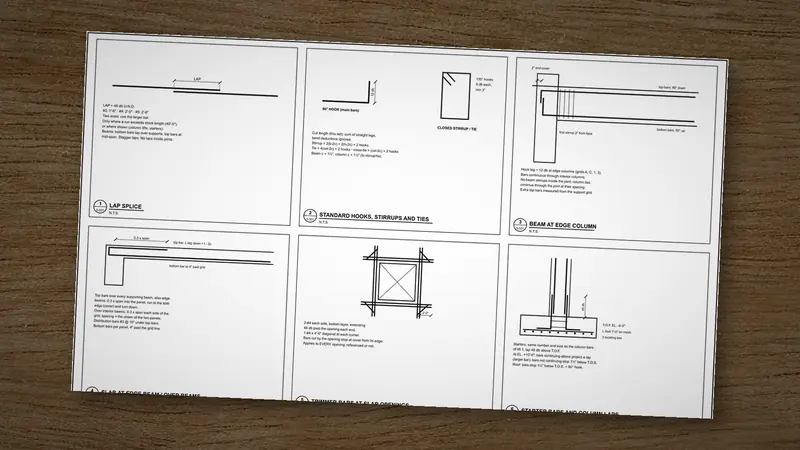
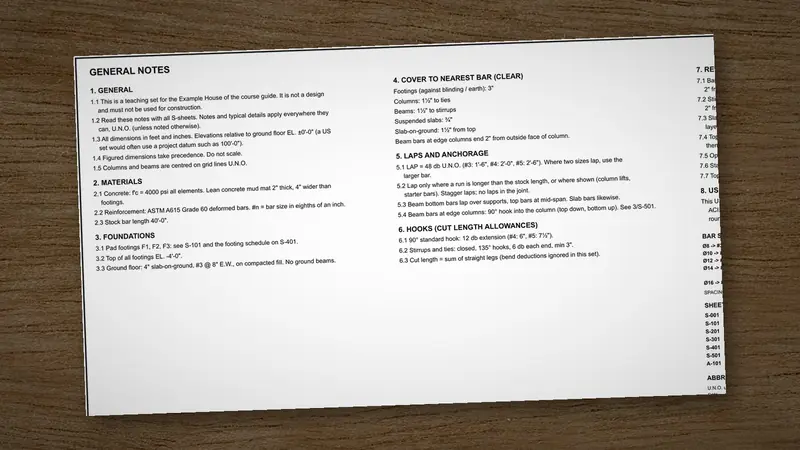
How to Read Structural Drawings follows one beam, B2, from the plan to the section, the schedule and the general notes, then decodes it in the six rebar notations you will meet on real sets. Plans, not slides. Takeoffs, not bid theory.
#5H1616ØT16Ø16N1661 pages · 12 exercises with answers · about 100 abbreviations · PDF · one payment
Sources
- the Wikipedia article "St. Francis Dam" and the reports it cites, and the ASDSO case study at damfailures.org.
Photo credits
- The St. Francis Dam: H. T. Stearns, U.S. Geological Survey, Public domain
- St. Francis Dam after the 1928 failure: H. T. Stearns, U.S. Geological Survey, Public domain
- St. Francis abutment: H. T. Stearns, U.S. Geological Survey, Public domain
- Standing section: Unknown author, Public domain
- Largest section of dam found downstream003: Imveracity, CC BY-SA 4.0
- Pp2before: SkyG702, CC BY-SA 4.0
- Pp2after: SkyG702, CC BY-SA 4.0
- Twisted Tracks: U.S. Geological Survey, CC BY 2.0
- Aftermath Canyon: SkyG702, CC BY-SA 4.0
- St. Francis Dam base remains tkksummers: Konrad Summers, CC BY-SA 2.0
- San Francisquito Reservoir on topo v2: Kbh3rd, CC BY-SA 3.0
- St. Francis Dam Disaster Site historical marker: Imveracious, CC BY-SA 3.0
Photos from Wikimedia Commons under the licences listed. All drawings are original.
The narration uses an AI clone of the author's own voice. All drawings are original.