What Does db Mean on Structural Drawings?
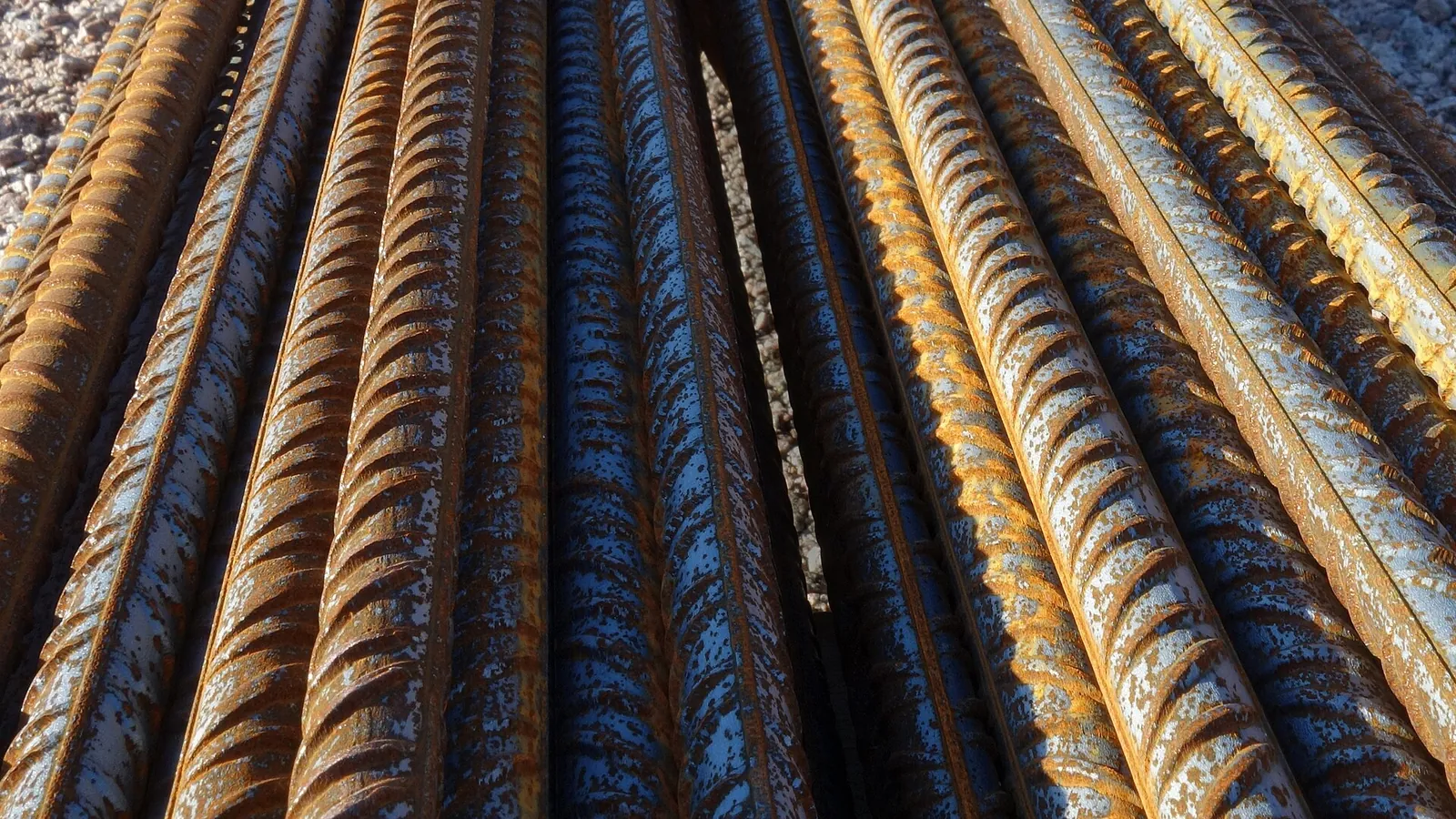
db means the nominal diameter of the bar. When a note says 48db, it means 48 times the bar diameter, so for a #5 bar (0.625 in) it is 48 x 0.625 = 30 in.
Where you see db on a drawing
On the drawing you will see db inside notes and details that apply to many bar sizes at once:
- Lap and development notes:
LAP 48db UNOorEXTEND 40db PAST SUPPORT. - Hook and bend details:
12db EXTENSIONon a hook, or6dbas the inside bend diameter. - Spacing and cover rules:
CLEAR SPACING NOT LESS THAN 1 dbin the general notes.
Writing lengths as a multiple of db lets the engineer give one rule that scales with the bar: a bigger bar automatically gets a longer lap or a larger bend. ACI 318 writes it as d with subscript b. The value of db is the nominal diameter from the bar standard, not a measurement over the ribs. Full bar data is on rebar sizes and weights and the rebar sizes reference.
How to convert db to inches
Multiply the number in the note by the nominal diameter of the bar it applies to. In US bar sizes, the bar number is the diameter in eighths of an inch, so a #5 is 5/8 in.
| Bar | db (in) | 12db | 48db |
|---|---|---|---|
| #3 | 0.375 | 4.5 in | 18 in |
| #4 | 0.500 | 6 in | 24 in |
| #5 | 0.625 | 7.5 in | 30 in |
| #6 | 0.750 | 9 in | 36 in |
| #8 | 1.000 | 12 in | 48 in |
| 16 mm | 16 mm | 192 mm | 768 mm |
Worked example
A slab plan shows bottom bars #5 @ 12" O.C. running 50 ft, and the general notes say LAP ALL BARS 48db UNO. Stock length is 20 ft.
- Lap length: 48 x 0.625 in = 30 in = 2'-6"
- A 20 ft bar overlapping the next one by 2'-6" adds 17'-6" of new length per extra bar
- Run: 50 ft. First bar covers 20 ft, leaving 30 ft
- Extra bars: 30 / 17.5 = 1.71, so 2 more bars
- Each line of bars: 3 bars, with 2 laps of 30 in (3 x 20 - 2 x 2.5 = 55 ft, so the last bar can be cut shorter)
Without the 48db note converted, the laps would be easy to forget: 2 laps x 2.5 ft = 5 ft of extra bar on every line across the slab. Laps in general are covered in lap splice length.
A common mistake
The common mistake is applying db to the wrong bar. If a note covers a #4 lapped to a #6, the general notes or the code decide which bar size governs the lap; do not assume it is the smaller one. The second mistake is mixing units in metric sets: 40db for a 12 mm bar is 480 mm (48 cm). Write the result with its unit every time.
Also check that the note says db and not d. On beam and slab details, d alone usually means the effective depth of the section, which is a different quantity altogether. Bend diameters written in db are explained in rebar bend diameter.
Frequently asked questions
Is db the same as the bar size number?
Not exactly. For US bars #3 to #8, the bar number divided by 8 gives db in inches. For #9, #10 and #11, the nominal diameters are 1.128, 1.270 and 1.410 in, which do not follow the eighths rule, so use the table in the bar standard.
What does 48db mean for a #4 bar?
48 x 0.5 in = 24 in, or 2'-0". It is a common way of writing a lap length in the general notes, but the value that applies to your project is whatever those notes say.
Is db measured over the ribs?
No. db is the nominal diameter, the diameter of a plain round bar with the same weight per foot. The deformations make the bar slightly larger in outside size.
This article explains general practice for learning purposes. On a real project, the drawings, the general notes and the governing code always win.